
Blog / Paperwork and law
Customs duty and GCT on car parts imported to Jamaica
Customs duty on car parts in Jamaica: duty rates, the CIF value, GCT at 15%, the small-package threshold and the declarations the Customs Agency needs.
21 April 2026 · Updated 27 October 2026

On this page
For many ordinary vehicle parts under HS heading 8708, Jamaica Customs lists 30% import duty and 15% General Consumption Tax (GCT), with Standard Compliance Fee (SCF) of 0.3% and Environmental Levy of 0.5%. Settle the exact part description, HS code, customs value and shipment charges first, because “car part” is too broad to produce one reliable rate.
The final amount can include duty, GCT, SCF, environmental levy and other Customs charges, alongside courier, freight-forwarder, broker, storage or delivery fees. Use the Jamaica Customs Agency estimator for a working figure, then ask the seller, courier, freight forwarder or Customs Broker for an itemised landed-cost quote.
What the Jamaica Customs tariff shows for ordinary parts
The Jamaica Customs Agency tariff effective 6 October 2025 places many ordinary vehicle parts under HS heading 8708. The examples below show the listed rates for the relevant tariff lines.
These rates come from the Jamaica Customs tariff effective 6 October 2025. The tariff uses abbreviations such as ID for import duty, GCT for General Consumption Tax, SCF for Standard Compliance Fee and ENVL for Environmental Levy. The newer tariff schedule effective 26 February 2026 lists the same 30% import duty, 15% GCT and 0.5% environmental levy for heading 8708 parts, so check the line for your part in the current schedule before you budget.
The 30% figure is not a universal rate for every item sold as a car part. Some tractor-specific entries within related tariff groups show 0% import duty. Electrical parts, engine components, bearings, filters and rubber products may fall under classifications outside HS 8708. The exact description, material, use and vehicle application matter.
Before paying an overseas seller, ask for the part’s proposed HS or tariff code and compare it with the Jamaica Customs current tariff information. A mechanic or parts shop can help identify the correct replacement, but the Customs classification still needs to match the imported item.
What Customs value means for your calculation
Jamaica Customs describes CIF as the cost of the imported goods plus freight and insurance. Keep the supplier invoice, payment record, shop receipt, freight information and insurance information together. Customs may use these documents when determining the value for duty.
 Keep the supplier invoice, payment record and freight papers together.
For an ordinary transaction-value import, the customs value begins with the price paid or payable, subject to the adjustments required by the Customs Act. When that method cannot be used, Customs applies the prescribed alternatives, including the value of identical goods, similar goods, deductive value, computed value and the fallback method. The Jamaica Customs value-for-duty guidance explains the starting point.
This matters when the part is used, refurbished, discounted, supplied free under a warranty arrangement or bought for a price that does not represent a normal sale. Ask the seller or freight provider how the invoice and supporting documents will be presented, and ask Customs or a licensed Customs Broker how the value should be supported.
Do not compare only the online price of the part with a local shop’s price. The overseas purchase may also involve freight, insurance, import duty, GCT, SCF, environmental levy, Customs Administrative Fee, stamp duty, broker charges, port charges, storage, delivery or other provider fees.
The US$100 de minimis rule
The Jamaica Customs Agency’s e-commerce guidance states that shipments with an FOB value of US$100 or less do not attract duties and taxes under the de minimis rule. The rule applies to commercial and non-commercial shipments.
When the FOB value is above US$100, duties and taxes are charged on the total CIF amount, not only on the portion above US$100. Freight-forwarder, courier, broker, storage and delivery charges can still be separate from Customs duties and taxes. Read the Jamaica Customs de minimis guidance alongside the provider’s quote.
FOB and CIF are different figures. FOB generally concerns the value at the point of export, while CIF includes the imported goods, freight and insurance. Ask the courier or freight forwarder to show the actual FOB, CIF and billable weight used for the shipment.
If several packages are being sent, ask whether they will be consolidated for Customs purposes. Also ask whether the provider treats the shipment as personal, non-commercial or commercial. Those details can affect the documents, clearance process and charges.
How GCT applies to imported parts
Standard-rated imported goods generally attract GCT at 15%. The JCA tariff lists 15% GCT for the ordinary HS 8708 examples above, and Tax Administration Jamaica’s GCT information explains the tax in the wider tax system.
 The amount to release a shipment is not the same as the seller's part price.
GCT is assessed by Customs during import clearance. It is not necessarily calculated as 15% of the online purchase price alone. The assessment can involve the customs value, import duty and other applicable components under the tariff and tax rules.
For that reason, a seller’s part price is not the same thing as the amount payable to release the shipment. Ask for a written breakdown showing the item price, freight, insurance, duty, GCT, SCF, environmental levy and each provider charge. Ask whether the quoted GCT is included or will be collected separately.
A business importing for resale should keep import GCT separate from GCT charged on a later local sale. A registered importer should ask Tax Administration Jamaica or a qualified tax professional about advance GCT, input-tax credit and the treatment of a later resale.
Using Jamaica Customs’ duty calculator
The Jamaica Customs Agency publishes the What’s My Duty calculator. It accepts the currency, shipping cost, insurance amount, transport mode, tariff code, item cost in the origin currency, quantity, package type and commercial status. Different items can be added separately.
The estimate can differ from the Customs assessment if the classification changes, the declared value is not accepted, another valuation method is used, or an applicable charge is not captured in the estimate. It can also differ when a permit, licence, certificate, preferential tariff or commodity-specific exemption applies.
The Jamaica Customs duties and taxes information is useful when reading the categories shown in a quote. The final amount is determined during Customs assessment.
Personal part, repair order or commercial import?
The reason for importing should be clear before the shipment is booked. A Jamaican driver importing one replacement part for their own vehicle has a different errand from a mechanic bringing in customer orders or a parts shop importing items for resale. Bringing in a whole vehicle is a different errand, covered in shipping a car from the US to Jamaica.
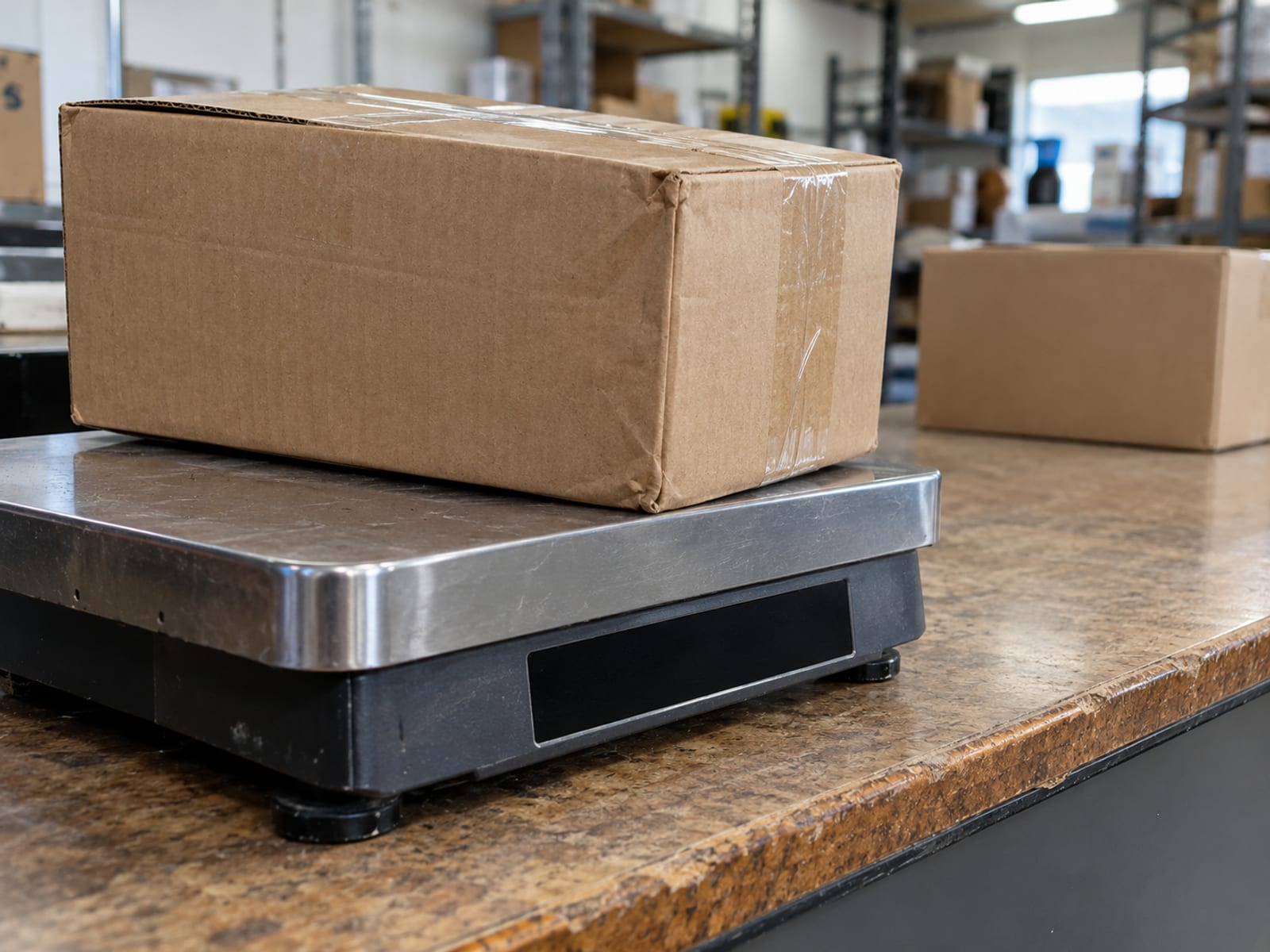 Say whether the shipment is personal or commercial before it is booked.
Goods intended for business, resale or business samples are commercial goods. Commercial imports normally use the electronic Single Administrative Document through ASYCUDA. JCA lists documents such as a Bill of Lading or Airway Bill, authentic supplier invoice, import permit or licence where required, Tax Compliance Certificate, TRN, GCT Certificate and an original Certificate of Origin where preferential treatment is claimed.
A Declaration of Value accompanies the import entry. Form C84 applies where the transaction-value method is used, while Form C85 applies where another valuation method is used. The Jamaica Customs declaration guidance gives the relevant form context.
A licensed Customs Broker is required for commercial declarations and for consignments with a CIF value of US$5,000 or more. Ask the courier or freight forwarder whether it will clear the shipment or whether you must appoint a broker. Ask which documents must be provided before arrival.
For a small importer deciding whether an overseas purchase is worthwhile, request an itemised landed-cost quote before shipping. It should identify the part, specification, quantity, currency, freight, insurance, Customs charges, broker fees, storage, port charges, delivery and any handling or disbursement fee.
Questions to put to the seller, courier or Customs Broker
Send the same written questions to each provider so the replies can be compared:
- What exact part description and specification will appear on the invoice?
- What HS or tariff code will be used?
- Is the quoted amount for the part only, or does it include freight and insurance?
- What are the FOB and CIF values?
- What billable weight will be used?
- Is the shipment personal, non-commercial or commercial?
- Will multiple packages be consolidated for Customs purposes?
- Does the provider clear the shipment, or must the importer appoint a Customs Broker?
- Does the provider’s quote include duty, GCT, SCF, environmental levy, Customs Administrative Fee and stamp duty?
- Are broker, storage, port, documentation, handling and final delivery charges included?
- Which documents are needed before the shipment arrives?
- Is a permit, licence or certificate required for this exact part?
- How will the value be supported if the part is used, refurbished, discounted, a warranty replacement or supplied free of charge?
- Will the final receipt show each Customs and provider charge separately?
- How long will the package be held before storage or return charges begin?
A courier’s or freight forwarder’s service fee is not the same as a statutory Customs charge. FedEx provides an Import Tool for Jamaica clearance information, while DHL publishes Jamaica shipping and Customs guidance. Treat provider charges as part of that provider’s service quote and request the current terms directly.
Prepare the part enquiry before you compare local quotes
Import costs are only one part of the decision. If the vehicle needs a replacement, prepare the identifying details before contacting a parts shop or mechanic. Have the make, model, year, engine or trim information, the part name, the side or position where relevant, and any catalogue or manufacturer number available.
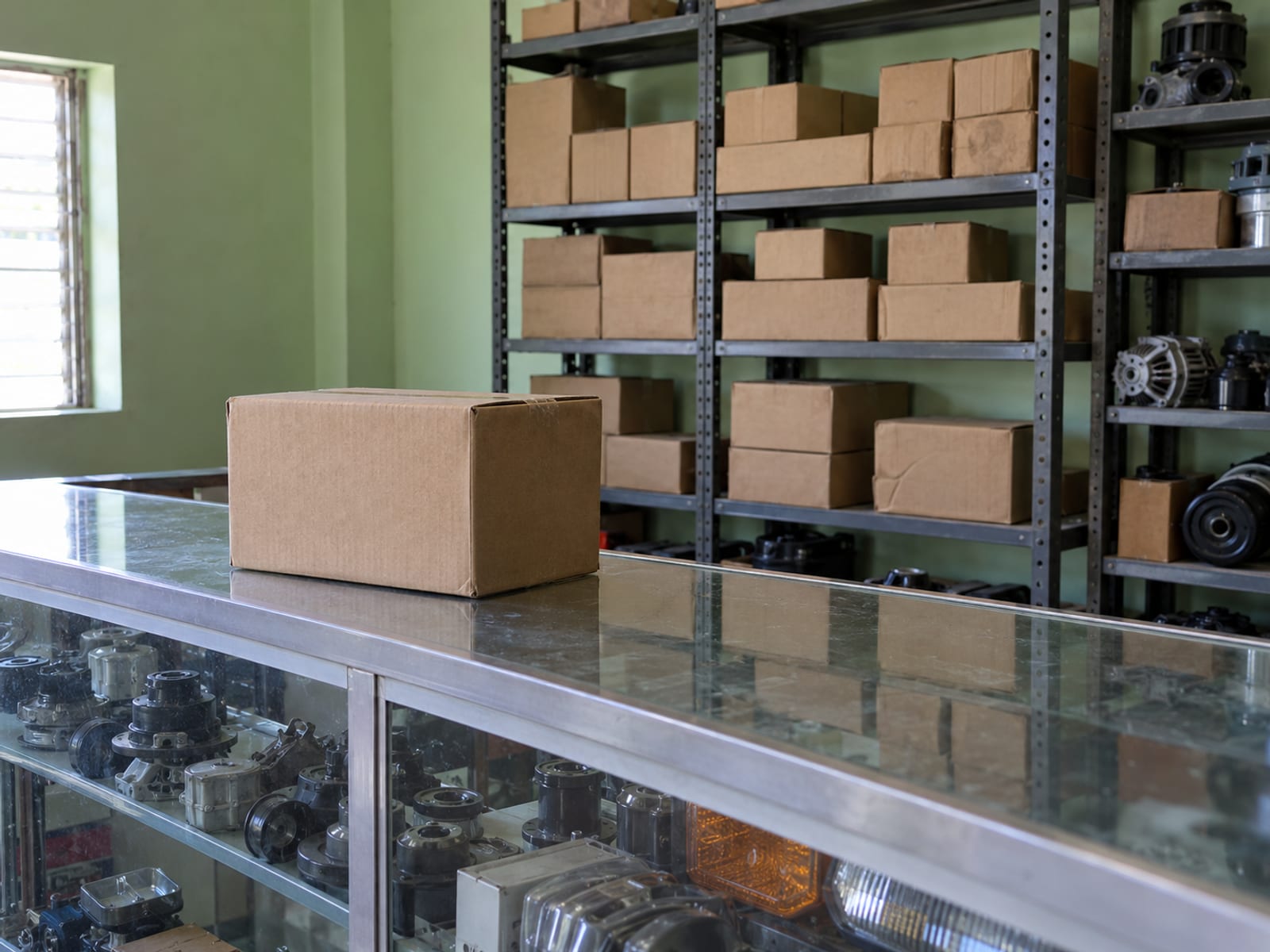 Give each shop the same vehicle details so the quotes can be compared.
A make, model and year may not settle fit. Some vehicles have different engines, transmissions, body configurations or market specifications. A chassis or VIN may be needed for a catalogue check, so send those details directly to the shop rather than posting them in a public comment.
You can compare an overseas landed-cost estimate with prices from auto parts shops and ask each business the same questions:
- Is the quote for the exact part specification?
- Is it a parts-only price or does it include fitting?
- If fitting is included, what labour or related work is covered?
- Is GCT included?
- What type of part is being quoted, such as new, aftermarket, remanufactured or used?
- What identifying information does the shop need to check fit?
- What does the written receipt show?
- What are the seller’s terms for returns or any stated warranty?
Do not compare a parts-only price with a fitted price as though they cover the same work. Keep the currency, specification, inclusions, shop and date beside every quote.
For a repair assessment, mechanics and repair shops can be contacted about inspection, parts sourcing, labour, related work and scheduling. If the errand involves body panels or glass, ask a body shop or glass provider whether the quoted work covers the part, fitting, preparation and finishing.
A damaged windscreen, brake component or suspension part may need a professional assessment. The purpose of an enquiry checklist is to help you describe the job and read the quote. It is not a fit guarantee or a diagnosis.
Finding a shop for the next step
The local errand may be separate from the import itself. You may need a parts shop to identify the replacement, a mechanic to assess the vehicle, or a body shop to discuss glass or bodywork. Ask the business about its current service, price, fitting scope, payment terms and appointment arrangements.
For a vehicle in Kingston or St. Andrew, you can compare the Kingston shops directory or the St. Andrew shops directory. If the vehicle is in St. Catherine, use the St. Catherine shops directory. The same directory structure covers Clarendon, Hanover, Manchester, Portland, St. Ann, St. Elizabeth, St. James, St. Mary, St. Thomas, Trelawny and Westmoreland.
If you are arranging a quote after a collision, the guide to what to do after a car accident in Jamaica covers the separate questions about reports, deadlines and next steps. For imported used parts, read about buying used car parts in Jamaica and ask the seller for the part’s condition, identification, price, fitting scope and written terms. For shipping routes and returns on an overseas order, read ordering car parts online for Jamaica; for Japanese-import vehicles, see parts for Japanese imports in Jamaica. If you are importing a whole vehicle rather than a part, read importing a used car to Jamaica.
Common questions
How much is duty on car parts in Jamaica?
Use Jamaica Customs’ “What’s My Duty” estimator with the exact tariff code, item value, freight, insurance, transport mode, package type and commercial status. Many ordinary HS 8708 examples show 30% import duty and 15% GCT, but the final amount depends on classification, customs value and applicable charges.
Is GCT calculated on the online price of the part?
Not necessarily. Customs may assess GCT using the customs value, import duty and other applicable components, so the online item price alone may not represent the taxable base.
What happens when the part costs more than US$100 FOB?
JCA’s de minimis guidance states that duties and taxes are charged on the total CIF amount when the FOB value exceeds US$100. Courier, freight-forwarder, broker, storage and delivery charges can remain separate.
When is a Customs Broker required?
A licensed Customs Broker is required for commercial declarations and for consignments with a CIF value of US$5,000 or more. Ask the provider whether it will clear the shipment or whether you must appoint the broker.
What should a small importer ask for before shipping?
Request the HS code, FOB and CIF values, freight and insurance, Customs charges, provider fees, document requirements, commercial status and any permit or certificate requirement. Ask for the final charges in writing, with GCT identified as included or separate.
For the next step, use the shop-type page or parish page for your area to find a parts shop, mechanic or body shop to contact about the vehicle and quote.