
Blog / Paperwork and law
Shipping a car from the US to Jamaica: costs, steps and timing
Shipping a car from the US to Jamaica: the export documents, import permit and age limit, shipping options and transit times, and duties due on arrival.
27 January 2026 · Updated 27 October 2026
On this page
Start with Jamaican eligibility and the import permit before you pay for shipping. For an ordinary passenger car, Jamaica’s general age limit is six years at importation, while a returning resident may qualify for a vehicle up to ten years old under separate conditions. Your total budget must cover the purchase, US inland transport, export charges, ocean freight, insurance, Jamaican duties and taxes, broker fees, port charges and local delivery.
Published shipping estimates for a standard vehicle from the United States range from about US$1,200 to US$2,000 for RoRo service, with container options reaching US$4,300. The exact amount depends on the vehicle, departure port, shipping method, destination charges and customs assessment.
Check the vehicle before arranging shipment
Before buying or shipping, gather the vehicle’s year, make, model, body type, VIN, engine size, fuel type, steering position, seating capacity, odometer reading, colour and unladen weight. These details are used for the Jamaican import-permit application and customs classification.
For most sedans, station wagons and SUVs with seating for up to eight people, the general age limit is six years. Small pickups up to 1,500 kg also have a six-year limit. Pickups and small trucks from 1,501 kg to 3,000 kg, panel vans and window vans generally have a ten-year limit. Larger commercial vehicles and trucks have limits based on their category and weight. Motorcycles and ATVs generally have a five-year limit under the Jamaica Customs Agency age-limit table.
Jamaica Customs Agency states that damaged or salvaged vehicles are prohibited under its motor-vehicle guidance. The title status, condition, steering position and exact vehicle category should therefore be confirmed with the Jamaica Trade Board before you commit to the purchase.
A returning resident may qualify to import a vehicle up to ten years old, subject to the returning-resident rules. Jamaica Customs Agency states that the returning resident must have possessed the vehicle for at least six months. Returning-resident status does not automatically remove duties, so ask Customs or a licensed customs broker for the assessment that applies to your vehicle. The returning-resident vehicle rules explain the relevant conditions. Returning residents bringing a car to Jamaica covers the age limit, duty and paperwork in more detail.
Get the Jamaican import permit first
Apply through JSWIFT to the Jamaica Trade Board for the motor-vehicle import permit before shipping arrangements are made. The application normally needs detailed vehicle information, an invoice or bill of sale, identification, your TRN, proof of citizenship where required, and a used-vehicle pre-shipment inspection certificate where applicable.
 Apply for the import permit before any shipping is booked.
The Trade Board’s published motor-vehicle permit information, accessed October 27, 2026, lists a permit fee of J$6,325, a print-out fee of J$1,150 and an amendment fee of J$2,875.50. It also lists three working days as the routine processing time, while an application can take longer if it is queried or the documents need correction. Confirm the current fee and application requirements when you submit the JSWIFT motor-vehicle permit application.
Wait for the permit before booking the shipment. Keep the approved import licence with the title, invoice, inspection certificate and identification documents. If the VIN, title brand, steering position or condition raises a question, send those details to the Trade Board or your broker before the vehicle leaves the United States.
Complete the US export steps
For a used self-propelled vehicle, obtain the original US Certificate of Title or a certified copy, along with two complete copies. The title should match the VIN and ownership information being used for the export.
The US Customs and Border Protection requirement is to file Electronic Export Information in the Automated Export System at least 72 hours before export. The filing applies to used self-propelled vehicles leaving by vessel, aircraft, road, rail or under their own power. The CBP vehicle export requirement sets out the title and filing details.
After the filing, present the vehicle and documents at the CBP export port for VIN examination and verification. Allow time for the port’s examination process and provide the vehicle in the condition required by the carrier and export terminal.
Once CBP clears the export, give the carrier the vehicle and shipping documents. The bill of lading is the carrier’s transport document, and the shipping agent provides it after the booking and vehicle handover. Ask the shipping agent when the bill of lading will be issued and which document details your Jamaican broker needs. The CBP bill-of-lading guidance describes the carrier document used for export.
Your US-side questions should cover:
- The exact receiving terminal and cutoff date.
- The sailing date and the port used.
- Inland pickup from the seller, auction or dealer.
- Export-filing and title-processing fees.
- Whether the vehicle must run, steer and brake under its own power.
- What happens if the vehicle misses the sailing or its documents are rejected.
- The date on which the quotation expires.
Compare RoRo and container shipping
RoRo means the vehicle is driven or moved onto a vessel designed for wheeled cargo. A container may be shared with other cargo or dedicated to one vehicle. Ask the operator which method is being quoted, what condition the vehicle must be in, whether personal items may remain inside, and what handling charges apply.
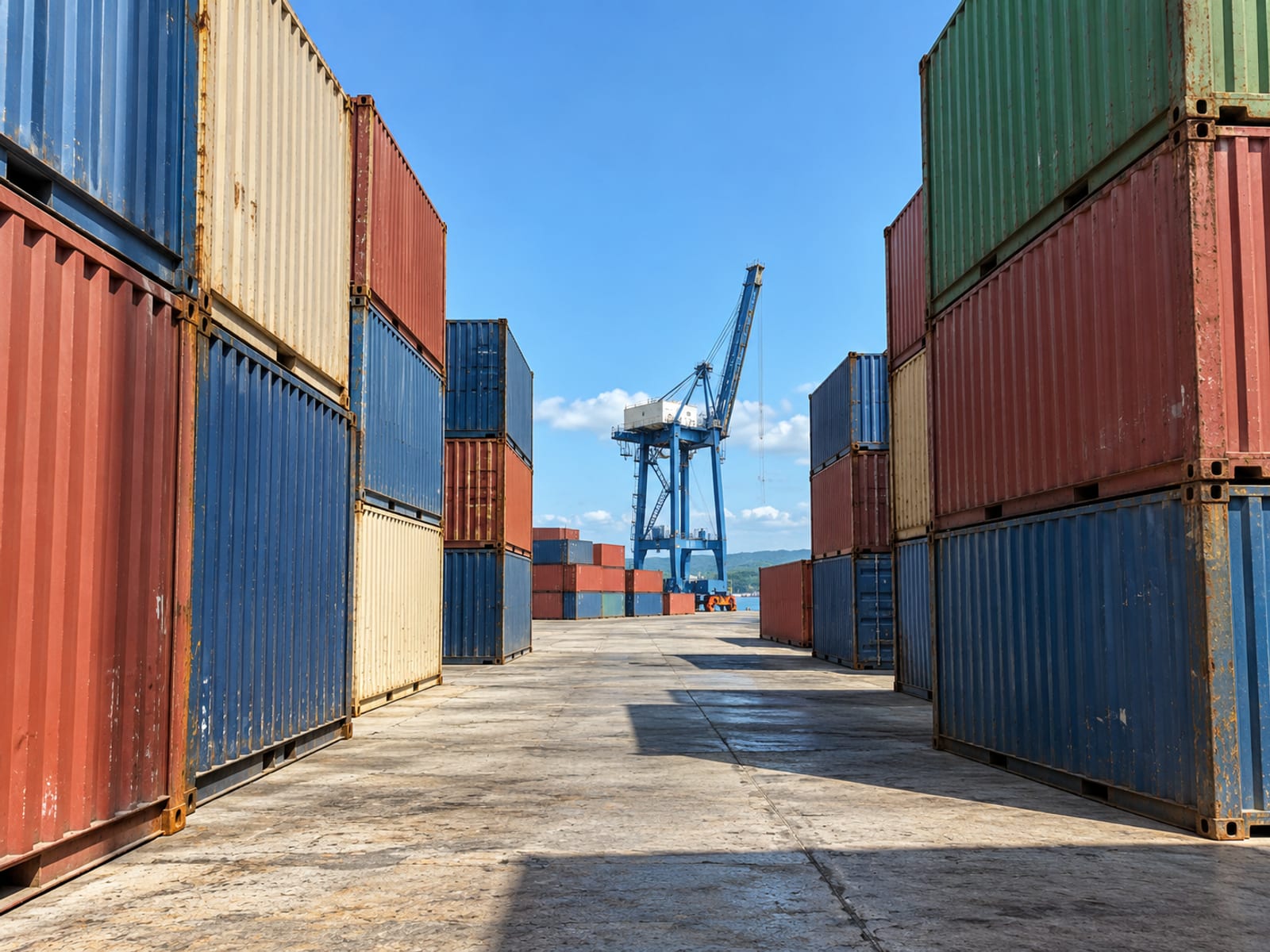 Ask which method is quoted, whether RoRo or a shared or dedicated container.
Dantful published the following October 2026 estimates for a standard vehicle from the United States. The figures are indicative commercial estimates, not fixed quotations, and may exclude inland pickup, destination charges, duties, taxes, terminal handling and local delivery.
The Dantful Jamaica shipping estimates separate the ocean service from costs that may be added. Ask for a written quotation that names the US pickup location, export terminal, shipping method, vehicle size, insurance, Jamaican destination, terminal charges, storage, customs-broker fee and local delivery.
Other operators publish different timing ranges. Puente Freight describes typical sea transit from the United States to Jamaica as one to three weeks and lists Kingston and Montego Bay as main ports. Royal Shipping Lines gives approximate ranges of three to seven days from Florida, seven to ten days from the Gulf Coast and ten to fourteen days from the Northeast. RORO From USA gives approximate ranges of five to ten days from the Jacksonville or Brunswick area and eight to fifteen days from the Baltimore or Newark area. These are transit estimates, not the full time from purchase to road use.
Ask the operator to separate ocean transit from port release and final delivery. Storage, documentation queries, customs examination, missed sailings and inland transport can extend the overall timeline.
Prepare for Jamaican customs clearance
After the import permit is issued and the shipment is arranged, give the Jamaican shipping agent or customs broker the documents needed for clearance. These may include the import licence, title, bill of lading, invoice, Tax Compliance Certificate, identification, Bill of Sight where required, and the eSAD or other customs declaration.
Jamaica Customs Agency states that imported motor vehicles must be cleared through a licensed customs broker. Ask the broker for the broker licence status, written fee schedule, documents required, customs-assessment basis and a list of charges excluded from the quote. The Jamaica Customs broker information helps you identify the broker arrangement to discuss.
The JCA motor-vehicle document list sets out the documents used for import processing. Ask whether the broker’s fee includes the eSAD, examination attendance, delivery order and communication with the shipping agent.
Budget for duties, taxes and port charges
Ocean freight is only one part of the landed cost. Jamaica Customs Agency says the amount payable depends on the customs classification, CIF value, engine capacity, fuel type, vehicle type and applicable concessions.
 Gasoline and diesel vehicles fall under different customs classifications.
For individual motor-car importers, the May 2025 rate sheet lists aggregate rates for several ordinary motor-car categories. The figures below show examples for gasoline and diesel vehicles, but the correct classification must be confirmed before you use a rate for budgeting.
The JCA individual motor-vehicle rate sheet also contains classifications for pickups, hybrids, electric vehicles and other vehicle types.
JCA lists possible charges including import duty, General Consumption Tax, Special Consumption Tax, the Standard Compliance Fee, environmental levy, Customs Administrative Fee, stamp duty where applicable, port and terminal charges, storage, handling and customs-broker fees. The Jamaica Customs duties and taxes page explains the categories used in an import assessment.
For used vehicles, the May 2025 rate sheet lists a Customs Administrative Fee of J$66,125. The final assessment can include other charges and depends on the vehicle’s classification and CIF value. Ask the broker to identify each charge separately rather than treating the ocean freight as the full import cost.
Convert the shipping estimate into Jamaican dollars
The Bank of Jamaica published counter rates on 27 October 2026 of J$157.8516 for US$1 buying and J$159.6491 for US$1 selling. Using the selling rate as a budgeting approximation, the published freight figures convert as follows.
The Bank of Jamaica foreign-exchange rates make clear which rate and date you are using for the estimate. These conversions are not shipping quotations, customs values or payment amounts. A bank, carrier, broker or Customs may use a different rate when payment or clearance takes place.
Ask for a written landed-cost quote
A useful quotation should identify the exact vehicle and separate freight from customs and local charges. Send the make, model, year, VIN, dimensions, pickup location, export port and proposed Jamaican arrival port.
Ask these questions in writing:
- Is the quoted service RoRo, shared container or dedicated container?
- Does the vehicle need to run, steer and brake under its own power?
- What is the inland pickup charge?
- What export filing, title-processing and terminal fees apply?
- Is cargo insurance included, and what are its exclusions and claims steps?
- Which Jamaican destination and terminal are included?
- Are wharfage, handling, storage, demurrage and delivery included?
- What are the free storage days and daily storage charges?
- What is the customs-broker fee?
- Does the broker fee include the eSAD, examination attendance and delivery order?
- May personal items remain inside the vehicle?
- What happens if the vehicle misses the sailing?
- What happens if the documentation is rejected or queried?
- On what date does the price expire?
- Which charges remain outside the quotation?
Keep the purchase price, freight, insurance, duties, taxes, broker charges, port charges and local delivery as separate lines. That makes it easier to compare two quotations that use different shipping methods or ports.
After customs release
After the vehicle is released, ask the relevant Jamaican authority or service provider about examination, registration, licensing and Certificate of Fitness requirements before using it on public roads. Vehicle registration renewal in Jamaica explains how the yearly registration step works. The customs release date is not automatically the same as the date all post-clearance requirements are complete.
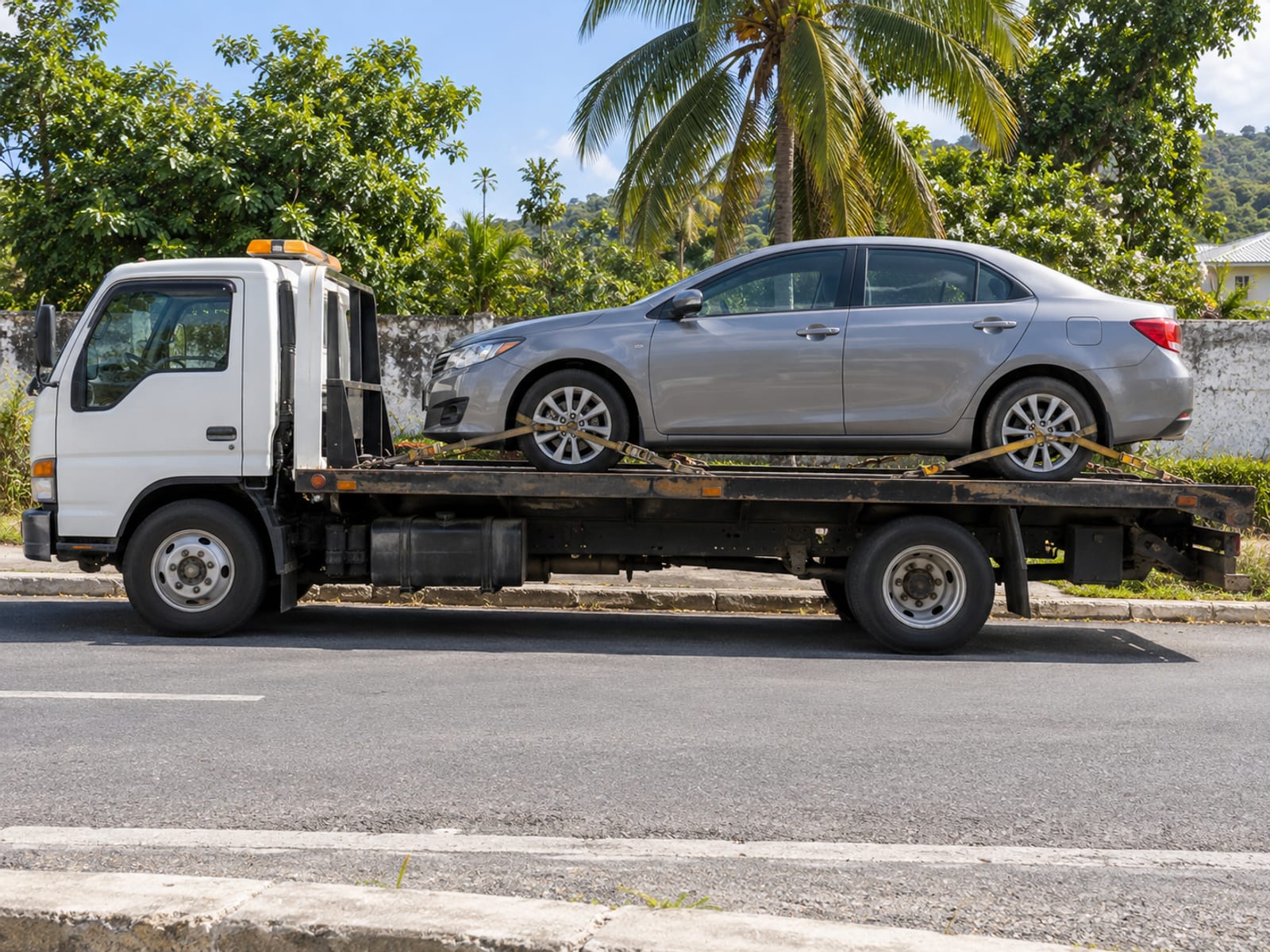 Ask a towing operator about the collection area, timing and price for the trip from the port.
For transport from the port, ask a towing operator about the collection area, timing, price, payment method and destination. For mechanical work after arrival, give the mechanic the VIN and full vehicle details privately, then ask for the assessment fee, parts specification, labour, related work, GCT and warranty terms in writing.
Common questions
What is the cost of shipping a car from the United States to Jamaica?
Published October 2026 estimates place RoRo freight from Miami, Port Everglades, Savannah, New York or New Jersey at about US$1,200 to US$2,000 for a standard vehicle. Shared and dedicated container estimates range from about US$1,200 to US$4,300, before charges such as inland pickup, duties, taxes, terminal handling, storage, brokerage and delivery.
How do you ship a car to Jamaica?
First confirm the vehicle’s Jamaican eligibility and obtain the Trade Board import permit through JSWIFT. Then complete the US title, AES and CBP VIN-verification steps, book RoRo or container freight, obtain the bill of lading, send the documents to a licensed Jamaican customs broker, pay the customs assessment and arrange post-clearance requirements.
What year can a car be shipped to Jamaica from the USA?
Most sedans, station wagons and SUVs with up to eight seats must generally be six years old or newer at importation. Small pickups up to 1,500 kg also generally have a six-year limit, while some larger pickups, small trucks, panel vans and window vans have a ten-year limit.
Can a returning resident ship an older vehicle to Jamaica?
A returning resident may qualify for a vehicle up to ten years old if the returning-resident conditions are met. Jamaica Customs Agency states that the person must have possessed the vehicle for at least six months, and the status does not automatically remove duties.
How long does shipping take?
Published sea-transit estimates range from about four to eighteen days depending on the US port and shipping method. Add time for inland pickup, export clearance, document checks, customs processing, storage, release and local delivery, then ask the operator to state each part separately in writing.
For the vehicle’s next local errand after arrival, use the mechanics and repair directory to find a shop in the parish where the car will be collected.