Blog / Planning
Buying used car parts in Jamaica without getting burnt
Buying used car parts in Jamaica: what to check before you pay, the receipt details to keep, published warranty terms and your rights under consumer law.
14 April 2026 · Updated 27 October 2026
On this page
Before you compare prices, settle two things: the exact part your vehicle needs and the written terms for supplying it. A used engine, transmission, alternator, body panel or other part should be matched using the vehicle’s details, the part number and, where relevant, the VIN or chassis number. Then get the condition, price, fitting charges, warranty and return process written down before payment.
Used parts can make sense when a new part costs more, takes longer to obtain or is unavailable for your vehicle. The decision is not simply about the lowest price. You also need to know what the part is, what was tested, what the quote covers and what happens if it is wrong or defective.
Start with the vehicle and part details
Have the vehicle make, model, year, engine type and transmission details ready. A photo of the old part, its label, casting number or serial number can help a parts shop narrow the enquiry. For some parts, the VIN, chassis number or engine number is needed.
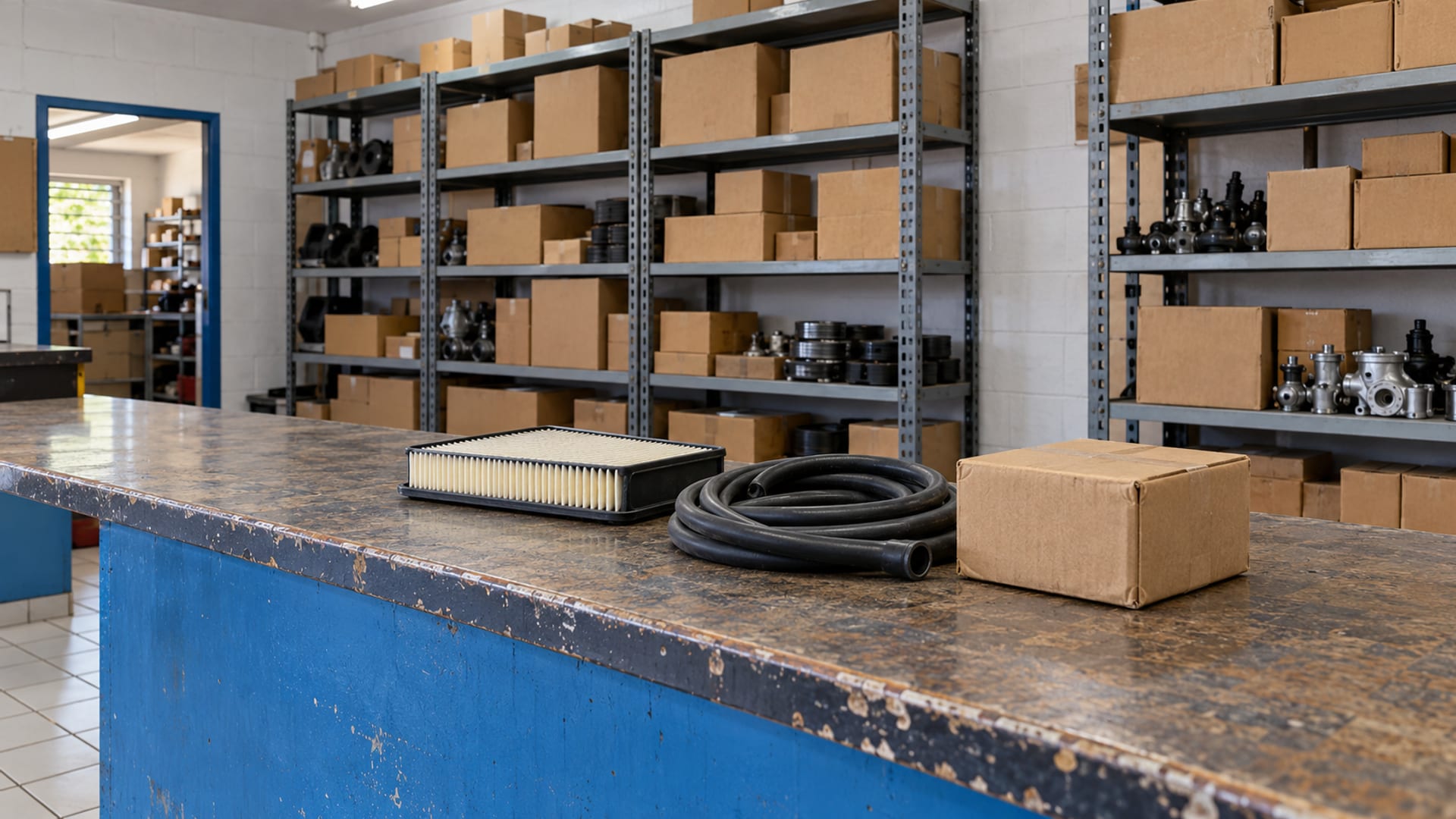
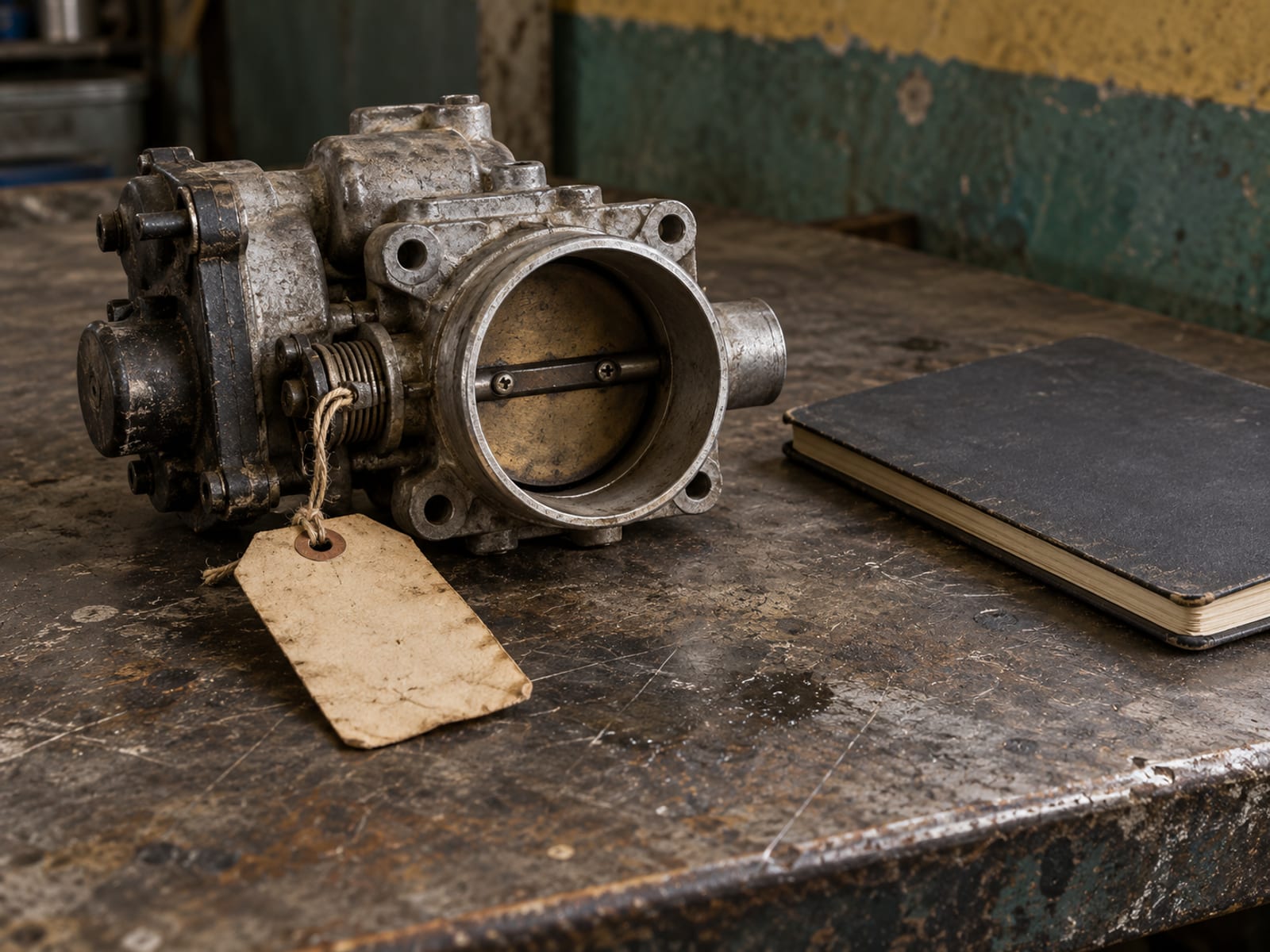 A photo of the old part and its label helps a shop narrow the enquiry.
Make and model alone may not settle fitment. Different engines, transmissions, trims and production changes can use different parts. Send chassis or VIN details directly to the shop rather than placing them in a public comment.
If you are arranging a repair remotely, ask the mechanic or installer to describe the part required in writing. A short message such as “engine for a 2015 Toyota Axio” may not be enough. Ask for the exact engine code, part number or other identifying detail that the shop will use when quoting.
You can compare the options between auto parts shops and mechanics and repair businesses, but a category does not establish that a particular business carries the part, fits it or handles returns. Those details belong to the individual enquiry.
If the vehicle is a Japanese import, the model name may still cover different engine or chassis versions. To prepare the vehicle details before contacting a seller, see parts for Japanese imports in Jamaica.
Ask what “used” means for that part
“Used” describes the part’s previous service, but it does not by itself describe its condition or history. Ask whether the part is used, reconditioned, rebuilt, OEM, aftermarket or new. Ask what vehicle it came from if that information is available, and ask for the mileage or operating history where the seller has it. For telling a genuine part from a copy, see how genuine and counterfeit car parts differ in Jamaica.
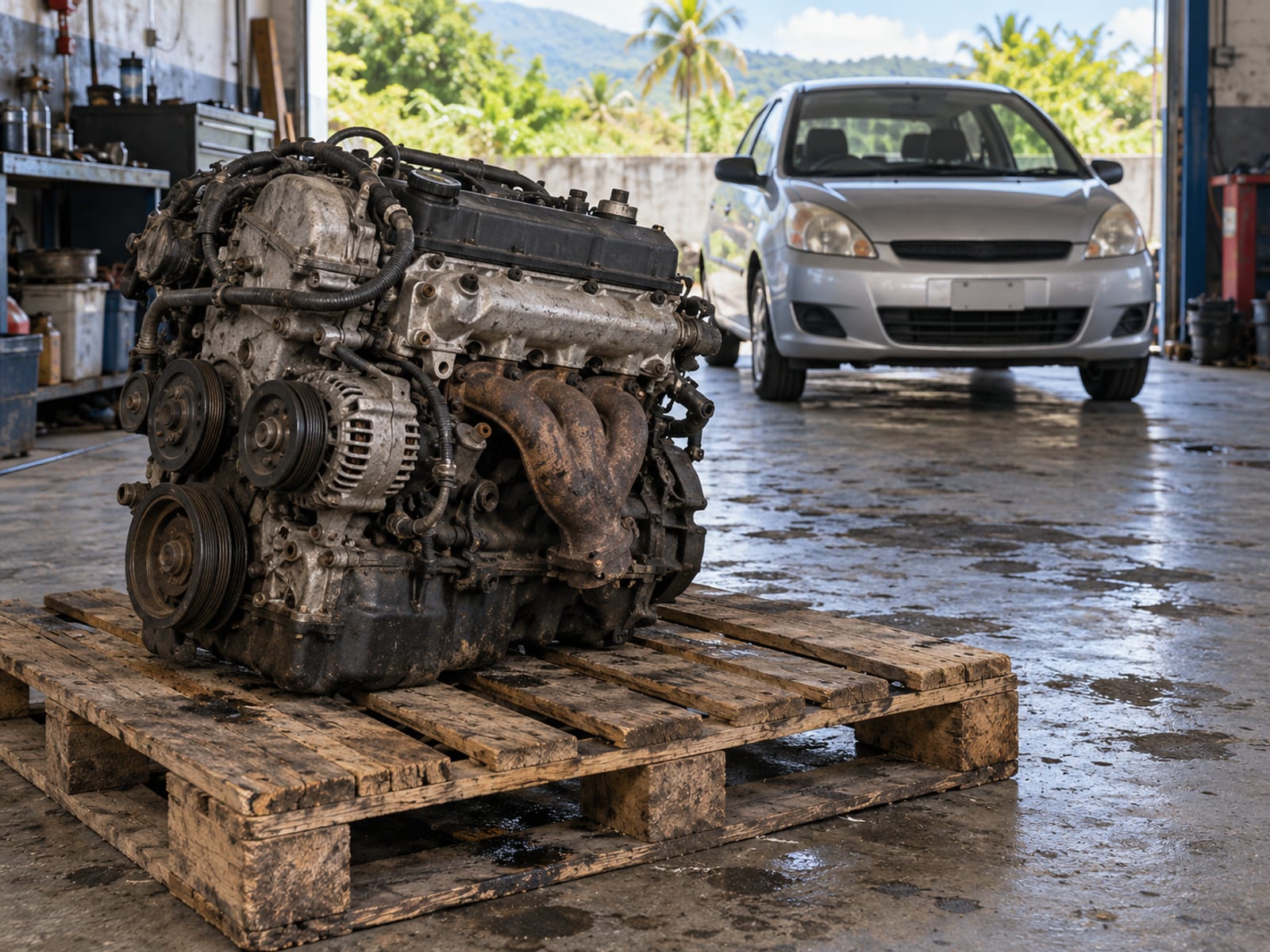 Ask what is included with an assembly and what was tested.
Also ask what “tested” means. Testing could refer to different checks depending on the part. Ask what was examined, what result was recorded and whether the test applies to the whole assembly or only a component.
For an engine or transmission, ask whether the quoted item includes attached components, sensors, wiring, mounts, manifolds or other pieces. For an alternator, compressor or starter, ask whether the price covers the complete unit or only a particular section. For a body panel, ask about dents, repairs, paint, clips and identifying numbers.
Photographs should show the part, labels, visible damage and identifying numbers. Keep those photographs with the quote and messages. If a seller sends a photograph of one item, confirm that the supplied item will be the same item or that the photograph is only an example.
Separate the part price from the full job
A quote for the part is not automatically a quote for fitting. Ask for each charge separately:
- Part price in JMD.
- General Consumption Tax, if applicable.
- Fitting or installation.
- Labour.
- Removal of the old part.
- Diagnosis or inspection.
- Delivery.
- Related fluids, seals, belts, gaskets or hardware.
- Any return transport or replacement cost.
Ask whether the quoted amount is current and whether it is for the exact specification you discussed. A parts-only price should not be compared with a fitted price as though they cover the same work.
If the shop is sourcing the part, ask when it is expected to arrive and what happens if the item is different from the description or does not arrive. If delivery is being arranged outside Kingston, ask for the delivery fee, destination and expected date in writing.
For tyres, ask for the exact size, load rating and speed rating shown for your vehicle, then confirm the price, fitting, balancing and disposal charges separately. You can compare quotes through tyre shops and ask the shop to match the vehicle information with the manufacturer’s specification.
Read the warranty and exchange terms before paying
A seller’s written warranty applies to that seller and that transaction. Read the time period, covered parts, exclusions, fitting requirements, testing conditions and return procedure. Ask whether the terms cover only the replacement part or also labour, removal, diagnosis, delivery and related damage.
 Read the warranty period, exclusions and return steps before you pay.
AutoTriageJa Traders at Shop 10 Red Hills Plaza, 110 Red Hills Road, Kingston 20, states that its used engines, transmissions and transfer cases pass a four-step quality-control process and carry a minimum two-week warranty, as published on its page accessed 27 October 2026. Ask the business to provide the conditions, return steps and labour responsibility in writing before payment. The published information is available on AutoTriageJa Traders’ used-parts page.
Meltha Honda Sales & Servs Ltd at 127 Hagley Park Road, Kingston, states that tested used parts such as engines, transmissions and alternators carry 30-day fitment coverage. It also states that new OEM and aftermarket parts carry the manufacturer’s warranty. Ask what the fitment coverage includes, what testing was done and whether labour, removal or delivery is included. The business describes its parts enquiry process on Meltha Honda Sales & Servs Ltd’s parts page.
Emelio Campbell’s Auto Parts states that exchanged items must be returned in original packaging with no signs of use, and that replacement costs are paid by the customer. Ask how that exchange policy applies to your particular part and transaction, then keep the written response with the receipt. The published exchange terms appear on Emelio Campbell’s Auto Parts page.
The Consumer Protection Act, 2005 applies information and warranty duties to goods sold as used. Section 18 says that, before payment, a provider must give applicable information about goods, including their origin, price in Jamaican currency, care, terms, components, proper use, weight, size, installation instructions and professional fees. The Consumer Protection Act sections on used goods also set out receipt and warranty provisions.
Section 20 requires a receipt showing the amount paid, purchase date, description of the goods or services, professional fee where applicable and other prescribed information. Section 21 addresses explicit and implied warranties for new and used goods. Section 24 addresses goods that are defective or materially different from the provider’s description. The facts of a dispute matter, so keep the receipt, description and written terms, raise the matter with the seller and ask the Consumer Affairs Commission about the applicable process.
Keep a proper record of the transaction
Before paying, ask the shop to put the following details on the receipt, quotation or written order:
- Seller’s legal or trading name, address and contact number.
- Vehicle make, model, year and engine type.
- VIN, chassis number or engine number where relevant.
- Part number, casting number or serial number.
- Condition, such as used, reconditioned, rebuilt, tested, OEM, aftermarket or sold as-is.
- Amount paid in JMD.
- Whether General Consumption Tax, fitting, delivery and labour are included.
- Warranty, fitment coverage or exchange period.
- Return, exchange and refund conditions.
- Any testing description or donor-vehicle information.
Keep photographs of the part and labels, WhatsApp messages, quotations, payment confirmation and the installer’s invoice if the shop fits the part. Consumer Affairs Commission receipt guidance advises consumers to keep receipts for major purchases for at least three years and to keep a photographic backup.
The Consumer Protection Act does not prescribe a VIN or part-number field on every receipt. Adding those details still helps identify what you ordered. For imported used auto parts, the Jamaica Customs Agency’s guidance says the seller’s invoice should describe the goods in detail, including the make, model and relevant identifying numbers such as VIN, engine or chassis numbers, along with engine capacity and fuel and transmission details where appropriate.
Read the Jamaica Customs Agency’s used-goods guidance when an imported part is involved. For duty and GCT on a part you bring in yourself, read customs duty on car parts in Jamaica and ordering car parts online for Jamaica; for the vehicle itself, read importing a used car to Jamaica.
If you are comparing new, used and aftermarket parts, keep the descriptions separate and do not treat the categories as interchangeable; see new, used or aftermarket parts in Jamaica.
Questions to put to the parts shop
Use the vehicle and part information you have gathered, then ask:
- “Is this part used, reconditioned, rebuilt, OEM, aftermarket or new?”
- “What is the exact part number, chassis code or identifying number?”
- “Will it fit my exact make, model, year, engine, transmission and trim?”
- “Can you match it using my VIN, chassis number or a photo of the old part?”
- “What vehicle did it come from, if you know?”
- “What was tested, and what does ‘tested’ mean for this part?”
- “Is the price for the part only, or does it include fitting, labour, delivery and GCT?”
- “What warranty or fitment coverage applies?”
- “How long does that coverage last?”
- “Does it cover the part, labour, removal, diagnosis, delivery or replacement only?”
- “What conditions end the coverage?”
- “What is the return or exchange deadline?”
- “Must the part remain uninstalled or in its original packaging?”
- “Who pays return delivery or replacement costs?”
- “Can those terms be written on the receipt or sent by WhatsApp before payment?”
- “Will the receipt include the part description, part number, vehicle details and amount paid?”
- “Do you have the exact part on hand, or are you sourcing it?”
- “If it is being sourced, what is the expected arrival date?”
- “What happens if the part is wrong or materially different from the description?”
Ask the seller to identify the person or business responsible for handling a return. If a mechanic is fitting the part, ask whether the mechanic’s labour is covered by the parts seller, the repairer or neither. Keep those answers separate in your records.
Questions for an insurer, lender or repairer
An insurer may have policy conditions about the type of replacement part, repairer or documentation required for a claim. Ask:
- “Does fitting a used, reconditioned or aftermarket part affect my policy or claim?”
- “Does the policy require a particular repairer or parts standard?”
- “What photographs, quotations or invoices are required?”
- “Is labour handled differently from the part price?”
- “Is any excess or depreciation applied?”
If a lender or finance company is connected to the vehicle, ask:
- “Does the finance agreement restrict where repairs or parts are purchased?”
- “Are repairs or replacement parts covered by the loan, warranty or related product?”
- “What documents are required before reimbursement?”
A quote is not an insurance approval, and an insurer’s approval does not replace the seller’s written description or return terms.
If the matter remains unresolved after you raise it with the business, ask the Consumer Affairs Commission which documents should accompany your complaint and what process applies. The Ministry of Industry, Investment & Commerce describes the need to use proper channels and raise the issue with the business first in its consumer redress guidance.
Where to get used car parts in Kingston
Businesses whose own pages publish used-parts services include AutoTriageJa Traders at Shop 10 Red Hills Plaza, 110 Red Hills Road, Kingston 20; Meltha Honda Sales & Servs Ltd at 127 Hagley Park Road, Kingston; Andrade’s Auto Parts Ltd at Shop 9, 71B Molynes Road, Kingston 10; AutoDon at 19 Keesing Avenue, Kingston 10; and P.A.J. Imports Ltd at 76 Constant Spring Road, Kingston 10.
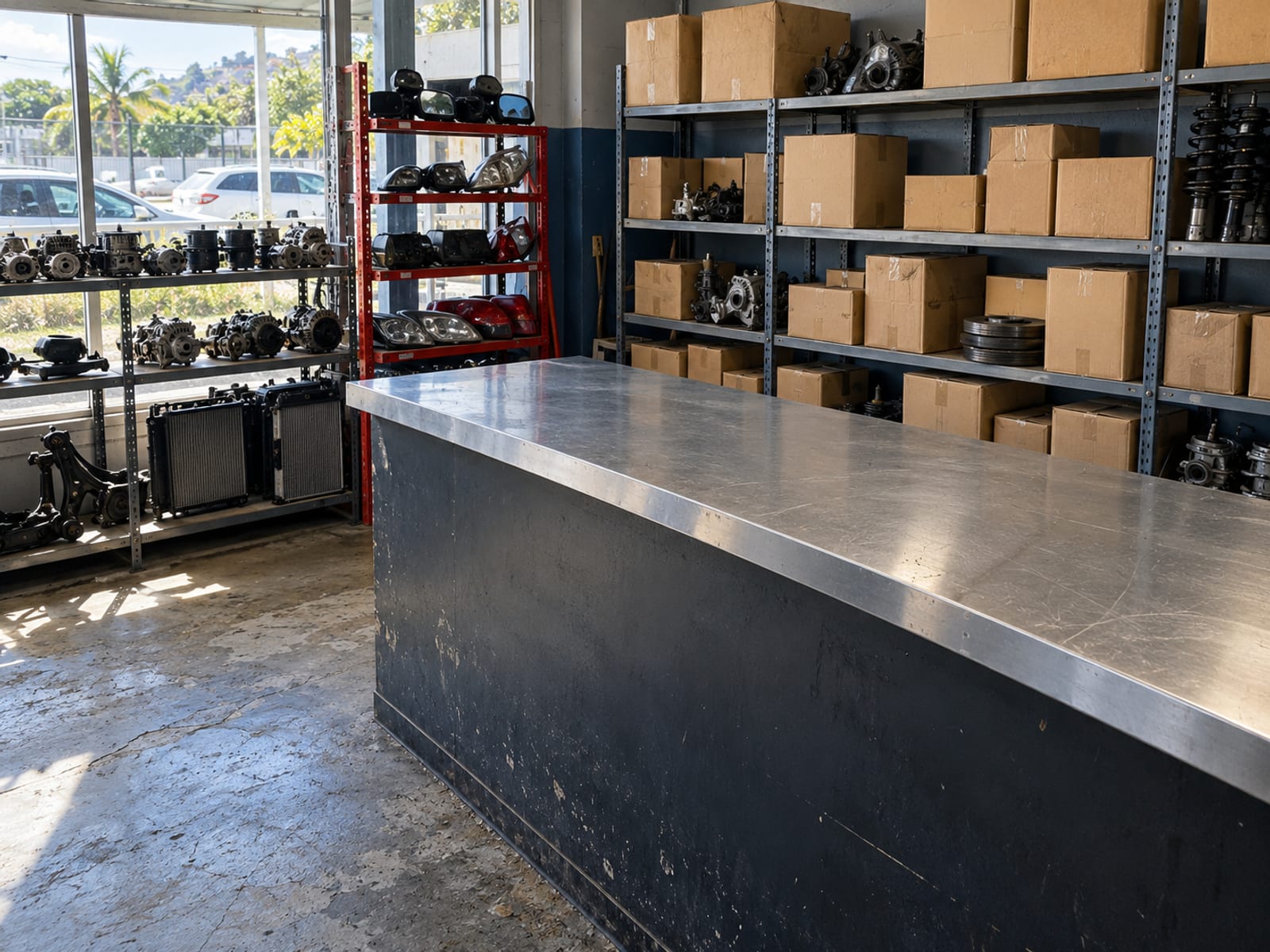 A listed address does not settle the part, price or terms, so ask the shop.
AutoTriageJa Traders publishes used axles, transfer cases, air-conditioning compressors, engines and transmissions, along with the phone number 876-372-1156. Meltha Honda Sales & Servs publishes new and used OEM parts for Honda and Acura vehicles and the phone number 876-758-8503. Andrade’s page describes new and used automotive parts for Japanese, American, Asian and European makes and publishes 876-758-3934. AutoDon describes its business as a used-car and parts specialist and publishes 876-901-7972. P.A.J. Imports describes its business as supplying genuine used parts and publishes 876-969-2841 and 876-451-8855. These details come from the businesses’ own pages: Andrade’s Auto Parts, AutoDon and P.A.J. Imports.
A published category or business address does not settle the exact part, condition, current price, fitting terms or return process. Give the shop the vehicle and part details, then keep the written answer.
If your errand is in Kingston, you can start with auto parts shops in Kingston; for another parish, use that parish’s page and contact the business about the exact part.
Is it safe to buy used car parts?
It can be suitable to buy a used part when the exact application, condition, price and written terms are clear for that transaction. “Used” alone does not establish that a part is compatible, tested or suitable for a particular vehicle.
Before payment, confirm the part identification, the seller’s condition description, the testing performed, the written warranty or fitment terms, the return process and the receipt. For safety-related components, ask the vehicle manufacturer, a qualified mechanic, insurer or relevant authority what specification and documents apply to your vehicle.
The Consumer Affairs Commission explains consumer rights relating to information, receipts, warranties and refunds in its consumer protection rights guidance. Those rights do not make every used part interchangeable, and they do not create a general change-of-mind return after an accurately described purchase.
Common questions
These answers cover questions people ask before arranging a used-part purchase in Jamaica.
Where to get used car parts in Kingston?
You can contact businesses whose pages publish used-parts services, including AutoTriageJa Traders, Meltha Honda Sales & Servs Ltd, Andrade’s Auto Parts Ltd, AutoDon and P.A.J. Imports. Give the business the vehicle identification and part details, then ask for the current price, condition, fitment terms and receipt information before travelling or paying.
Is it safe to buy used car parts?
A used part may be suitable when its identity, application, condition, testing, price and written terms are clear. Ask what was tested, what the coverage includes and what happens if the part is defective or materially different from the description.
What should a used-parts receipt show?
The receipt should show the amount paid, date of purchase, description of the goods or service and any applicable professional fee. Ask the seller to add the vehicle details, part number, condition and agreed warranty or exchange terms so the transaction is easier to identify later.
Does a used part automatically come with labour coverage?
No single seller’s terms apply to every transaction. Ask whether the written coverage applies to the part only or also to labour, removal, diagnosis, delivery and replacement costs.
Can you return a part because you changed your mind?
The Consumer Protection Act addresses defective goods and goods materially different from the provider’s description. It does not create a general change-of-mind return for an accurately described part, so read the seller’s exchange conditions before payment and keep them with the receipt.
For your next step, find an auto parts shop in your parish to contact about the exact part and terms.