
Blog / Prices and quotes
Importing a used car to Jamaica: age limits, duty, GCT and the full landed cost
Importing a used car to Jamaica: the age limits, import duty, GCT and other charges, how landed cost adds up and the steps to clear the car.
15 September 2026 · Updated 27 October 2026

On this page
Before paying a seller, exporter or shipping agent, settle three things: whether the vehicle qualifies by age and classification, whether the Trade Board can issue the import licence, and what the complete Jamaican-dollar cost will be after freight, Customs charges, port expenses, registration and insurance.
An ordinary used car, station wagon or SUV is generally limited to six years, but the final cost depends on engine size, fuel type, CIF value and several charges beyond the purchase price.
You will need the vehicle’s exact manufacture date, model year, VIN, engine size, fuel type, body type, title details and purchase price. Give those details to the Trade Board and a licensed Customs broker before committing money.
Check the vehicle’s age before shipping
The Jamaica Customs Agency says an ordinary motor car may be up to six years old. The Trade Board’s motor-vehicle age schedule also places cars, station wagons and SUVs at six years. The relevant result can depend on the vehicle’s manufacture date, model year, first registration and classification, so provide the VIN and supporting documents before purchase.
 Age, classification and title details are settled on paper before any money moves.
The Trade Board’s published categories give these maximum ages:
The Trade Board’s motor-vehicle policy contains the age schedule for these categories. For motorcycles, see motorcycle parts in Jamaica. A vehicle that is damaged or salvaged is treated separately under the import rules, so a qualifying age does not by itself settle eligibility.
You must obtain the motor-vehicle import licence or permit from the Trade Board before the vehicle arrives. Applications are submitted through JSWIFT, and a used vehicle requires the applicable pre-shipment inspection certificate. The Trade Board’s 2024 permit notice also confirms the ordinary six-year limit for used cars and SUVs.
Put these details in writing before paying:
- VIN and title or export certificate details
- Manufacture date and model year
- Make, model and body classification
- Fuel type and engine displacement
- Steering position
- Unladen weight where the category depends on weight
- Purchase price and export-country location
- Whether the title is clear, damaged or salvage
- Inspection appointment and certificate arrangements
- The person responsible for the Trade Board permit
The Jamaica Customs Agency’s import-document requirements include the import licence, title or export certificate, bill of lading, invoice, Tax Compliance Certificate and the broker-prepared electronic declaration.
Understand the duty, SCTA and GCT bands
The Jamaica Customs Agency’s 2025 individual-importer rate sheet gives percentage rates for ordinary motor cars, station wagons, estate cars and SUVs. These are rate bands, not a vehicle-specific landed-cost quote.
 Duty, SCTA and GCT are worked out on the Customs value, so keep the figures written down.
SCTA means Special Consumption Tax. Customs applies the relevant duty and tax treatment to the vehicle classification and customs value.
The JCA 2025 motor-vehicle rate sheet also has separate categories for buses, vans, trucks, hearses and limousines. For those vehicles, seating capacity, weight, fuel, engine size and body classification can change the applicable rate.
CIF means cost, insurance and freight. It is the principal customs-value basis used in the import calculation. Your broker should explain the CIF figure and the documents supporting it, especially when the invoice price differs from the value used by Customs.
Jamaica’s standard General Consumption Tax rate is 15%. The General Consumption Tax Act sets out the treatment of standard-rated, zero-rated and exempt supplies. Some large passenger buses and qualifying electric vehicles may receive different treatment, so ask Customs about the exact classification. For more on those vehicles, see electric cars in Jamaica.
For a service or quoted charge, J$100,000 before 15% GCT becomes J$115,000 when GCT is added separately. If J$100,000 already includes GCT, the embedded tax is J$13,043.48 and the pre-GCT amount is J$86,956.52. Ask, “Is GCT included in this price?”
The JCA duties and taxes page lists the Standards Compliance Fee at 0.3% of CIF and describes the other Customs charges that may apply. The environmental protection levy changed from 0.5% to 0.85% of CIF on 1 October 2026 under the JCA environmental levy notice. Confirm the rate that applies on the assessment date.
Add every part of the landed cost
The landed cost is more than the seller’s price and ocean freight. Your calculation may include:
- Vehicle purchase price
- Inland transport in the exporting country
- Pre-shipment inspection and certificate
- Ocean freight
- Marine insurance
- Import duty, SCTA and GCT on the applicable Customs base
- Environmental protection levy
- Standards Compliance Fee
- Stamp duty where applicable
- Customs Administrative Fee
- Licensed Customs broker charges
- Port, wharfage, terminal handling and storage
- Trucking or delivery from the port
- Certificate of Fitness examination
- Registration, verification, plates and licensing
- Insurance required before registration
The JCA requires a licensed Customs broker for motor vehicles regardless of value. The JCA broker requirement is therefore part of the planning decision if you are importing personally.
Ask for separate written figures for the broker’s professional fee, port and terminal charges, storage, trucking, inspection, registration and insurance. A shipping quote should state the route, sailing date, whether it is RoRo or container freight, and whether marine insurance is included. Shipping from the United States is covered in shipping a car from the US to Jamaica.
A commercial example dated 12 October 2026 from IPAS used a vehicle price of US$15,400, shipping and insurance of US$3,097, and a CIF value of US$18,497. It showed J$1,226,850 in duties and taxes, J$279,262 in destination handling and J$122,812 for an optional import-management service, with a stated total of J$4,563,874. These figures belong to that vehicle and service package.
A separate Clearie import-cost calculator example based on US$9,800 CIF used J$159.58 per US$1 and showed J$2,328,812 as the estimated buy, ship and clear total, including J$764,928 in Customs charges. Its example excludes broker, wharfage, trucking, registration, licensing and fitness. Treat both examples as planning figures, then obtain quotations for your own vehicle.
Convert foreign prices carefully
The Bank of Jamaica publishes average and daily foreign-exchange information. Its September 2026 monthly weighted averages included a US dollar sell rate of J$158.93, a US dollar buy rate of J$157.16, a Canadian dollar sell rate of J$114.05, a pound sterling sell rate of J$213.28 and a euro sell rate of J$184.35. The Bank of Jamaica exchange-rate data is dated information; the rate Customs applies is the one for the date of your own clearance.
 Note the currency, the rate and its date every time you convert a foreign price.
For an IPAS example dated 12 October 2026, the planning rate used was J$158.6717 per US$1. Treat that as the rate used in that example. Ask your broker which Bank of Jamaica rate applies to the valuation or payment date.
When comparing a foreign seller’s price with a Jamaican-dollar estimate, write down:
- The foreign currency
- The exchange rate used
- The date of the rate
- Whether the amount is purchase price, CIF or a full service total
- Whether freight, marine insurance and GCT are included
- Which charges remain unpaid
Returning residents and special concessions
Returning-resident status does not remove motor-vehicle duty. An eligible returning resident may import a vehicle up to ten years old if it has been in that person’s possession for at least six months, while full duty and taxes remain payable. The JCA returning-resident vehicle rules also require the Trade Board import licence before the vehicle arrives. A fuller guide is bringing a car to Jamaica as a returning resident.
Separate concessionary programmes may apply to groups such as farmers, senior teachers, government travelling officers, public-transport operators and tourism-sector transport operators. The Ministry of Finance and the Public Service grants vehicle concessions, and the programme rules and supporting documents determine eligibility. Ask that ministry or your broker for the current requirements that fit your circumstances.
What to ask the broker, shipper and insurer
Use the vehicle details rather than a general description such as “a 2021 SUV.” Ask the broker to confirm:
- Is this vehicle eligible under its exact manufacture date and classification?
- What permit or import licence is required, and who will submit it through JSWIFT?
- Does this used vehicle need pre-shipment inspection?
- Is the title acceptable, and what documents are needed from the exporter?
- What Customs value will be used if the invoice price is questioned?
- What are the exact duty, SCTA, GCT, levy, CAF, SCF and stamp-duty amounts?
- What does your professional fee cover?
- Which port, wharfage, terminal, storage and trucking charges remain separate?
- What Customs documents must I provide?
- What amount is due before shipment, on arrival and before release?
Ask the shipping provider for the route, sailing date, freight method, insurance price, insurance coverage and destination charges. Ask the insurer about the premium, exclusions, inspection requirements and whether comprehensive cover is available for the vehicle’s age and condition.
Ask about any lender requirements before signing a loan arrangement. The lender may require a valuation, deposit, interest terms, security and particular insurance documents. A broker’s estimate is not an invoice, and an insurer’s quotation is not approval of a claim. Car loans in Jamaica covers the lender side in more detail.
Clearing Customs and finishing the process
The JCA motor-vehicle processing information covers the declaration and release process. Customs may assign a declaration to a green, blue, yellow or red lane. The lane affects the level of verification, document review or physical examination.
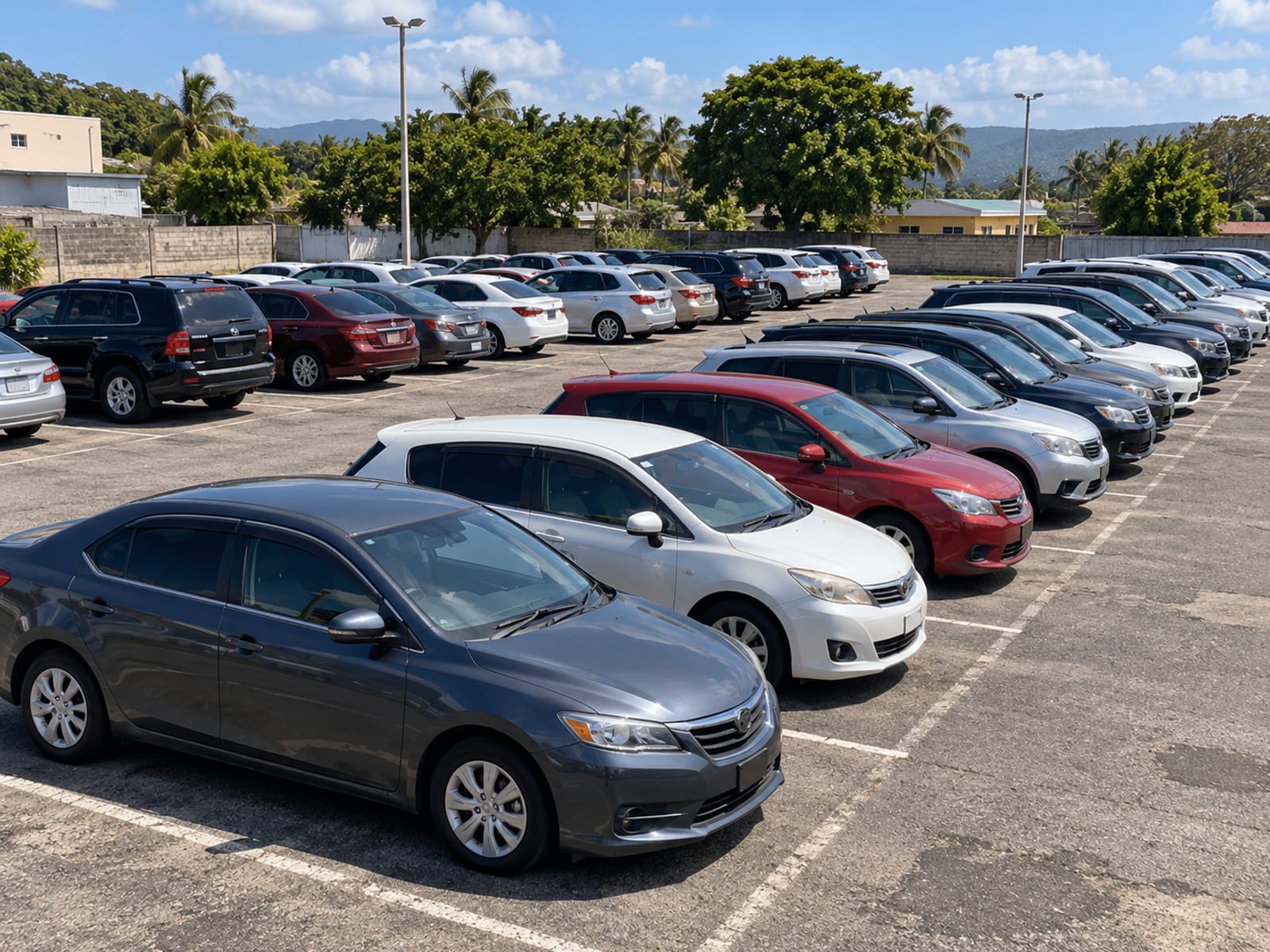 After release, the vehicle still needs fitness, registration and insurance steps.
The JCA says declarations assigned to its Entry Processing Unit are currently processed within 20 hours after duty payment and lane assignment. That is one declaration-processing stage. It does not include the ship’s arrival, discharge, document preparation, broker submission, examination, valuation questions, port release, storage, trucking, Certificate of Fitness or registration.
The JCA Entry Processing Unit information gives that processing timing. Ask your broker for a written estimate covering vessel arrival, document readiness, Customs submission, inspection if required, duty payment, release order, port pickup and delivery.
Before the declaration is submitted, compare the VIN, make, model, year, colour, currency and delivery terms across the invoice, title, bill of lading, inspection certificate and permit. Corrections can affect the clearance process and the charges that follow.
After release, arrange the Certificate of Fitness examination, verification, registration, plates, licensing and insurance. The exact fees and documents should be confirmed with the responsible authority, broker, insurer or service provider for the date of your transaction.
If you need a local mechanic to inspect replacement parts or prepare the vehicle after arrival, use the mechanics and repair directory and give the mechanic the make, model, year, engine details and VIN directly. Those details help with an enquiry, but they do not by themselves establish part fit.
Common questions
How much does it cost to import a car in Jamaica?
There is no single price. Add the vehicle price, inland transport, inspection, freight, marine insurance, CIF-based duty, SCTA, GCT, levies, Customs fees, broker work, port charges, trucking, fitness, registration, licensing and insurance. The vehicle’s fuel type, engine size, body classification and CIF value affect the calculation.
How old can you ship a car to Jamaica?
An ordinary used car, station wagon or SUV is generally limited to six years under the Trade Board schedule and JCA guidance. A Trade Board import licence must be obtained before shipping, and the used vehicle needs the applicable pre-shipment inspection certificate.
What is the oldest year vehicle that can be imported to Jamaica?
There is no single oldest model year for every vehicle. Cars, station wagons and SUVs have a six-year limit, while other categories have different limits, including up to 30 years for heavy trucks and heavy-duty equipment. Give the Trade Board the VIN, manufacture date, model year and classification before paying the seller.
How long does a car take to clear Customs?
The JCA states that declarations assigned to its Entry Processing Unit are currently processed within 20 hours after duty payment and lane assignment. The full process can also include shipping, document preparation, examination, valuation, port release, storage, trucking, fitness and registration, so ask the licensed broker for a vehicle-specific estimate.
When you have the vehicle details and your area, use the Jamaica auto-shop directory to find the local service provider you need to contact.