Blog / Prices and quotes
Used tyres in Jamaica: what to check before you buy
Used tyres in Jamaica: how to read the DOT date, check tread and damage, compare prices with GCT, and what the road rules and the 2010 import ban say.
24 March 2026 · Updated 27 October 2026
On this page
Settle the tyre’s exact specification and condition before you settle the price. Check the size, construction, load index, speed rating, DOT date, tread depth and complete sidewall, then ask for the full fitted cost in J$ or JMD, including labour and GCT. A used tyre can cost less upfront, but the saving only makes sense when the tyre has enough usable life and can meet the vehicle’s requirements.
You may need one tyre, a pair or a full set after a puncture, uneven wear or a failed fitness inspection. Start with the vehicle placard, owner’s manual or existing tyre markings. Make, model and year can help a shop begin the enquiry, but they do not always settle fitment. Keep chassis or VIN details for the seller or mechanic directly, rather than posting them publicly.
Read the tyre before discussing the price
The DOT or TIN code is moulded into the tyre sidewall. For tyres made since 2000, the final four digits show the manufacturing week and year. A code of 3520, for example, means the 35th week of 2020. The tyre date-code explanation from Goodyear also helps you distinguish the manufacture date from the date the tyre was fitted or sold.
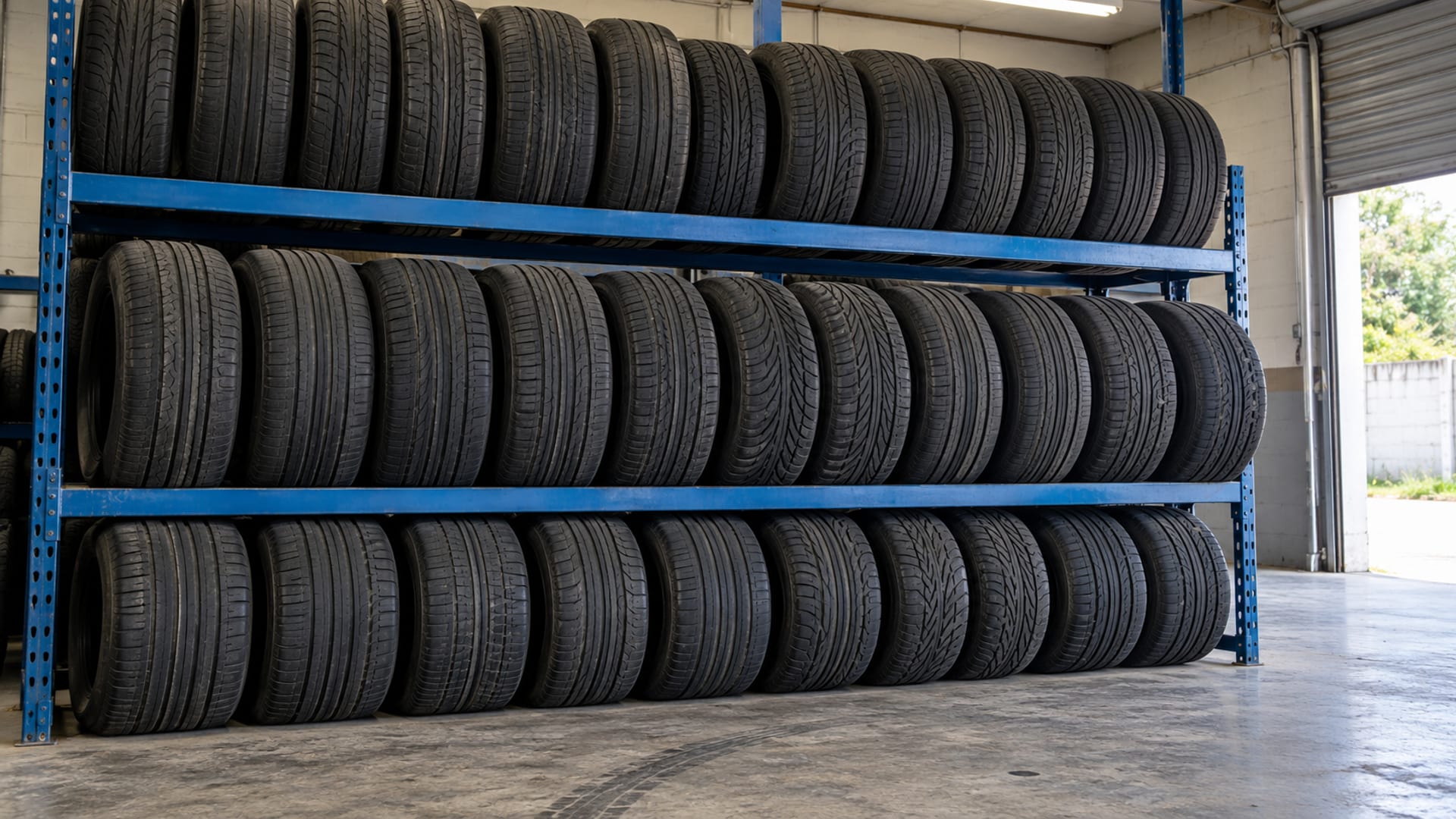
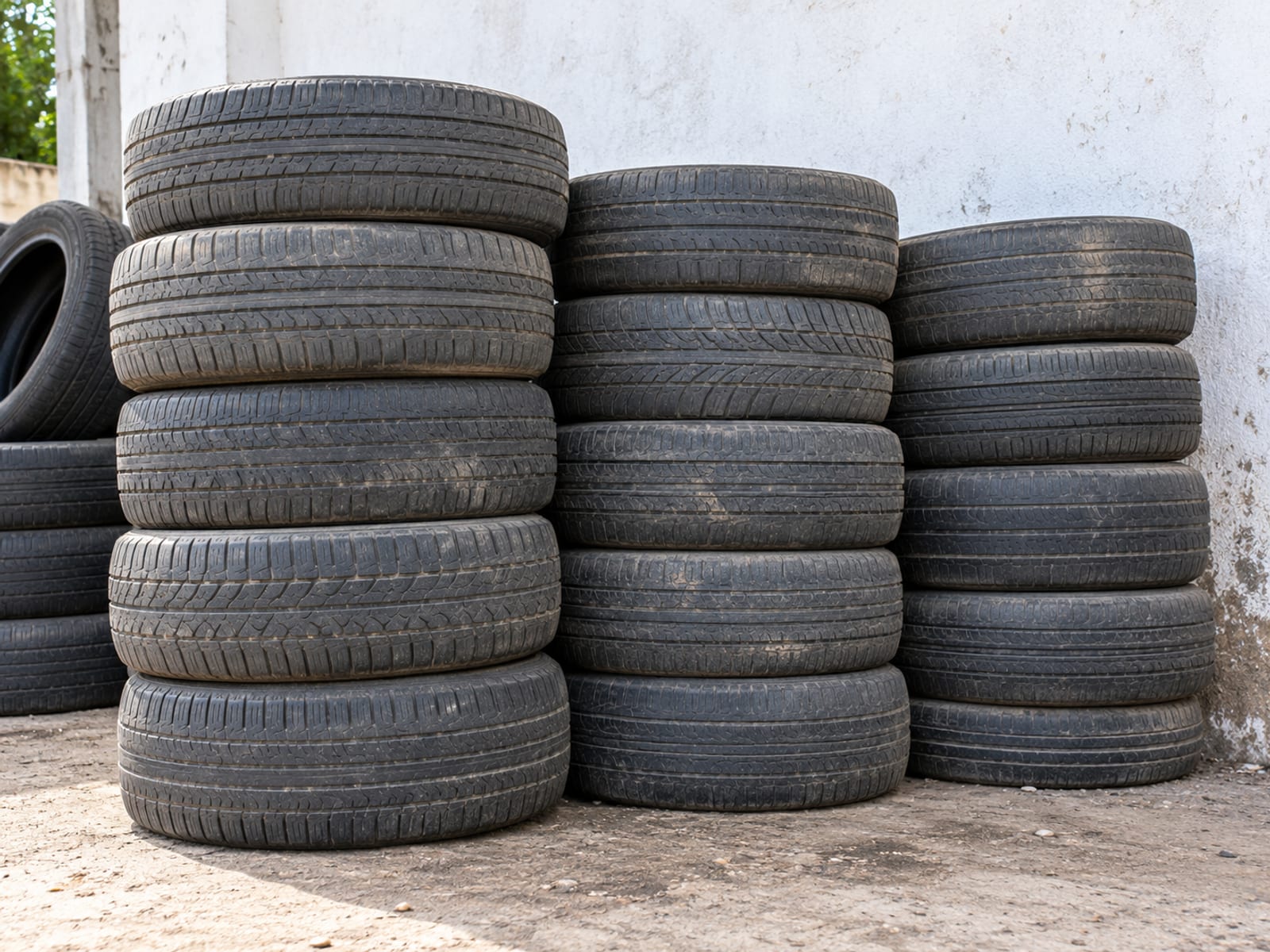 Look for the full date code on a stacked tyre before you talk about the price.
The complete date code may appear on only one sidewall. Inspect both sides, or ask the seller to show a clear photograph of the inner sidewall when the outside code is incomplete. A three-digit code points to a tyre made before 2000 and does not give an unambiguous modern year without more information.
Record the code before you compare prices. A tyre with plenty of tread can still be old, cracked or damaged. Age is one part of the assessment, not the whole decision.
Manufacturers set their own service-life guidance. Michelin recommends professional inspection after five years of use and replacement by ten years from manufacture, regardless of remaining tread, as stated in Michelin’s tyre information. Goodyear recommends removing tyres after six years in service, or using the DOT date when the service date is unknown, in its tyre-life guidance. Vehicle and tyre manufacturers may set different guidance for particular products.
Inspect tread, sidewalls and repairs
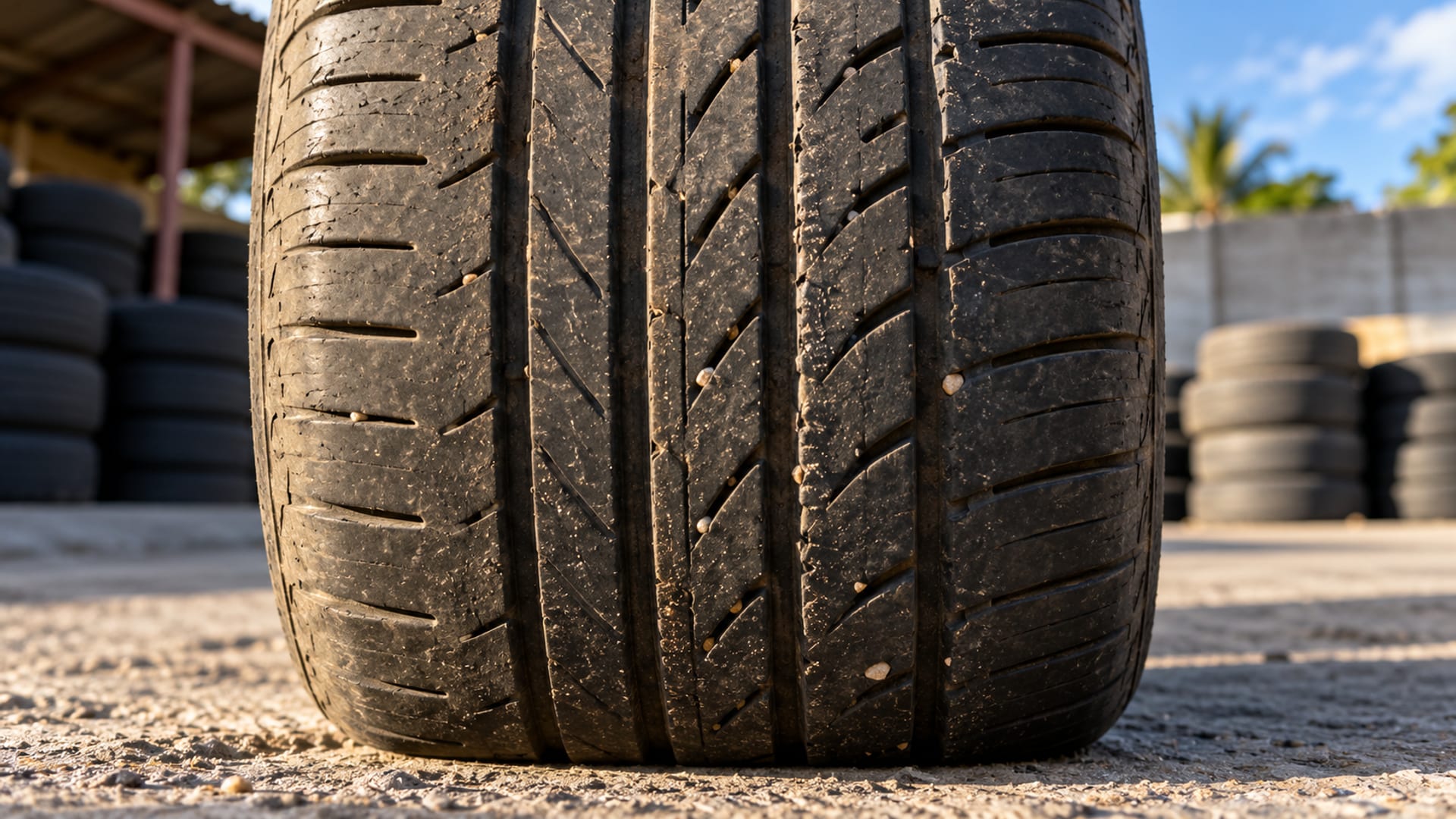
Ask for the measured tread depth, not only the phrase “good tread”. Measure across several points and compare the inner shoulder, centre and outer shoulder. Serious uneven wear can point to alignment, suspension, inflation or previous-use issues that need a separate assessment. Wheel alignment and balancing prices in Jamaica shows what an alignment visit includes.
Treadwear indicators become flush with the tread at about 2/32 inch, or 1.6 mm, as described in NHTSA’s tyre information. This is a practical warning point, not a reason to treat every tyre above that measurement as suitable.
Reject a tyre with visible sidewall bulges, cuts, cracks, exposed cords, impact damage or serious uneven wear. Look for plugs, patches and other repairs in the tread, and ask whether the tyre has been driven underinflated or exposed to heat and sunlight during storage. A seller should be able to identify repairs rather than leave you to guess from a quick glance.
Inspect the shoulder and the full circumference, not just the section facing outward. Ask for a clear photograph of the whole tyre if you are comparing options by WhatsApp. If the date code, tread measurement or sidewall cannot be examined properly, you have less information for the decision.
Match the tyre to the vehicle
The required size may look like 195/65R15, but that marking is only part of the specification. The number before the letter describes width, the next number describes the aspect ratio, and the letter identifies construction. The final number identifies the wheel diameter. The load index and speed rating appear alongside the size and also matter.
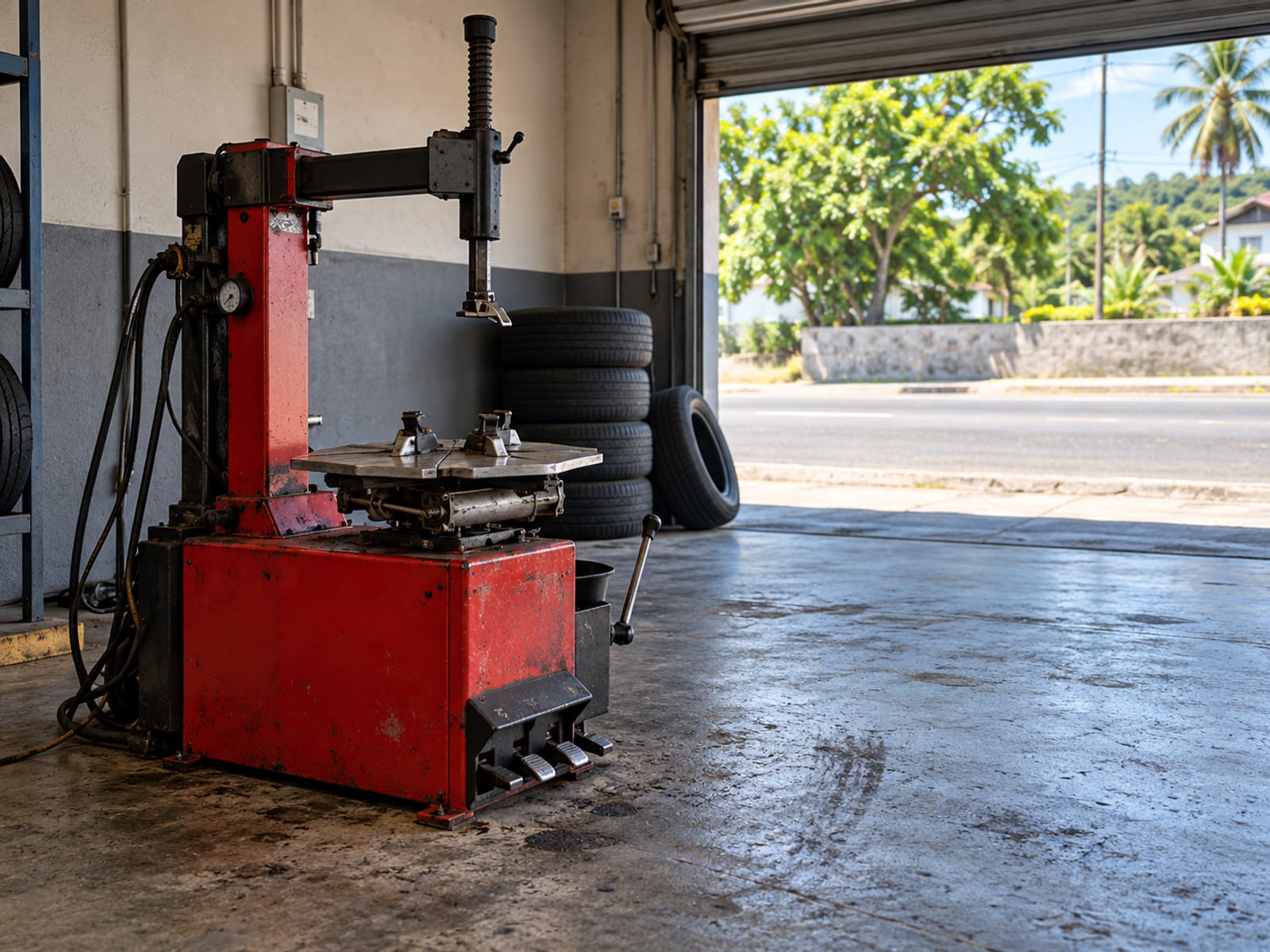 A shop fitting the tyre needs the exact size, load index and speed rating.
A radial tyre is commonly identified by the R in the size marking. Still, ask the seller to state the construction, brand, model, load index and speed rating in writing. Use the vehicle placard, owner’s manual or manufacturer information for the required specification. Michelin’s tyre-size guidance explains why a change in size or specification needs a proper fitment check.
Do not buy a single tyre simply because its size appears to match. Ask the seller or mechanic to inspect the vehicle’s existing tyres and state whether one tyre, a pair or a full set is appropriate for the vehicle. The answer can depend on the remaining tread, axle arrangement, tyre type and the vehicle maker’s requirements.
A category listing does not establish that a particular shop supports your vehicle. Prepare the exact size, brand and model if known, load index, speed rating, DOT code and photographs. Send chassis or VIN details privately to the shop when requested. If you are also choosing new wheels, rims in Jamaica: prices, sizes and fitment covers bolt pattern, offset and width.
Check Jamaica’s tread and roadworthiness rules
Regulation 56 of Jamaica’s Road Traffic Regulations, 2022 says a motor vehicle must not be operated with a tyre unless the tread pattern is clearly visible across the tyre’s breadth and around its entire circumference, with tread of at least 1.6 mm. Motorcycle tyres must have at least 0.8 mm. The Road Traffic Regulations, 2022 also address excessive cuts and breaks. Riders can read motorcycle parts in Jamaica for where to buy and what to check.
The regulation prohibits tyres so worn or damaged that fabric is exposed, or tyres in such disrepair that they may cause danger to passengers or other road users or damage the road. The metal wheel must not be allowed to contact the road. These are legal requirements, not a complete buying test. A tyre at 1.6 mm may meet the stated minimum while still being a poor choice because of age, cracking, damage, repairs or uneven wear.
The Island Traffic Authority administers vehicle testing and certificates of fitness, as described on the Island Traffic Authority information page. Under the Road Traffic Act, a certificate of fitness may be refused when prescribed fitness requirements are not met and may be revoked after inspection if the vehicle no longer complies. The Road Traffic Act, 2018 sets out the relevant authority for those decisions.
If a tyre was connected with a failed inspection, ask the testing office or the shop handling the inspection to identify the actual condition that needs attention. Do not assume that fitting any tyre above the minimum tread measurement will settle every fitness issue.
For the wider process, see Certificate of fitness in Jamaica: cost, requirements and the eFitness process. It explains the documents and questions to raise with the responsible office, while the current inspection decision remains with the authority conducting the test.
Ask where an imported used tyre came from
Jamaica’s treatment of imported used tyres has a history that matters to importers and buyers. On June 15, 2010, the Jamaica Information Service reported an announcement of a ban on importing used motor-vehicle tyres, effective July 1, 2010. The notice concerned tyres arriving after that date and described the measure as temporary while a standards and licensing system was being developed. You can read the dated Jamaica used-tyre import announcement.
 Imported goods pass through Customs, so ask a seller where a used tyre came from.
Later government material recorded a controlled exception for agricultural use. A 2017 Jamaica Information Service report described provisions for used tyres for heavy-duty equipment such as tractors and harvesters. The Ministry’s 2018 to 2019 annual report recorded facilitation for sugar and agricultural sectors under the Trade (Prohibition of Importation) (Used Tyres) (No. 2) Order, as shown in the Ministry annual report.
If you are buying locally, ask the seller where the tyre came from and request any available invoice or import documentation. If you plan to import, confirm eligibility and any licence or permit requirement with the Trade Board, Jamaica Customs Agency and Bureau of Standards Jamaica before paying for shipment. The Jamaica Customs Agency permits information explains that regulated goods may require approval before importation.
Customs classification and payment are separate from permission to import. The Jamaica Customs Agency duties and taxes information covers the customs side, while the current Jamaica Customs tariff includes classifications for retreaded or used pneumatic tyres. A tariff line does not, by itself, settle whether an ordinary passenger-car used tyre may be imported without the required approval.
Get the complete price in writing
There is no single island-wide price for a used tyre. The amount depends on size, brand, model, age, remaining tread, condition, load index, speed rating and the work included. Fitting, balancing, valve replacement, disposal and GCT can change the total.
Ask for a written or WhatsApp quote that names:
- Price per tyre in J$ or JMD.
- Exact size, such as
195/65R15. - Brand, model and construction.
- Load index and speed rating.
- DOT week and year.
- Measured tread depth and whether it is even.
- Puncture repairs, plugs or patches.
- Fitting, balancing, valves, alignment and disposal.
- Labour and GCT.
- Receipt, exchange period and written warranty terms.
Parts-only prices should not be compared with fitted prices. A quote for one tyre should not be compared with a quote for a pair unless the specifications, condition, services and tax treatment are clear.
Tyre Zone Auto Parts directs customers to request current tyre pricing and publishes fitting, balancing and alignment among its services. Its Tyre Zone tyre information and Tyre Zone service information can help you frame the enquiry, but the seller still needs to state the exact tyre and complete terms.
Tyre Warehouse publishes branch addresses, telephone numbers and listed hours through its Tyre Warehouse locations page. When speaking with a branch, ask about the specific size, condition, date code, fitting and total price you need.
A product listing from Jamaica Auto Parts Express shows why a bare online price needs context. Its “Tyre Only 175/65/15” listing shows US$31.25 after a listed discount from US$40.00; ask the seller whether a listed tyre is new or used. Treat any online amount as a starting point for questions about the currency, specification, condition, date and included work.
Put these questions to the seller
You can send the following enquiry in one message:
“Please confirm the exact size, brand, model, construction, load index and speed rating for the tyre. What is the full DOT date code, and can you send a clear photograph of it? What tread depth did you measure across the tyre? Is the wear even? Has it had any puncture repair, plug, patch, sidewall damage, cracking, bulge or impact damage? How was it stored?”
Then ask:
“Will you fit it to my vehicle? Does the quoted total include balancing, valve replacement, alignment, disposal, labour and GCT? What is the complete price in J$ or JMD? Will I receive a receipt? What exchange period or written warranty applies if it leaks or proves unsuitable? Can you inspect the other tyres and state whether one tyre, a pair or a full set is appropriate?”
 Send the size and photographs first, then ask whether the shop will fit the tyre.
Give the shop the vehicle’s exact tyre marking and the information from the placard or manual. If a mechanic is assessing uneven wear, suspension or alignment, use the mechanics and repair directory to find a business serving the area, then ask that mechanic to state what inspection or work the quote covers.
For tyre-specific enquiries, use the tyre shops directory. If you also need a part connected with the tyre work, such as a valve or wheel component, the auto parts shops directory can help you identify nearby businesses to contact.
Common questions
How much should a used tyre cost?
There is no single Jamaican price because the tyre’s specification, DOT age, tread, condition and included work all change the amount. Ask for a current quote in J$ or JMD that states the tyre, fitting, balancing, valves, disposal, labour and GCT separately where applicable.
Is it worth buying used tyres?
It may reduce the upfront cost, but the decision depends on the specific tyre’s age, condition, specification and remaining usable life. Buy only after checking the full date code, tread measurement, sidewalls, repairs, ratings and written transaction terms.
Where is the best place to buy cheap used tires?
A suitable seller is one that lets you identify and inspect the actual tyre, states the complete fitted price and provides a receipt with any exchange or warranty terms. Compare sellers on the same specification and services, not on the tyre price alone.
How do I read the date on a tyre?
Find the DOT or TIN code on the sidewall and read the final four digits on tyres made since 2000. The first two digits show the manufacturing week and the last two show the year, so 3520 means week 35 of 2020; inspect both sidewalls because the full code may appear on only one.
If you need a tyre seller near you, start with the Tyre shops directory for the shop type and parish area where you are arranging the purchase.